


TikTok Search LLM development is an engineering effort to better interpret queries and surface relevant videos while balancing response time and infrastructure cost. In field notes featuring search engineer Tong, TikTok explains why a bigger model is not necessarily a better search system. H2T Media Group examines the search pipeline, the optimization choices, and what content teams can responsibly learn.
 Key Takeaways
TikTok Search must interpret user intent, retrieve candidate content and rank relevant results in milliseconds while considering video, audio, text and user interactions.
Essential facts about TikTok Search and LLMs
- TikTok describes a three-part process: understand search intent, retrieve candidate content and rank results by relevance.
- Its search engineering account discusses video, audio, text and user interactions without publishing ranking weights.
- Tong’s team is helping move Search toward an LLM-powered approach; the post does not confirm a platform-wide rollout.
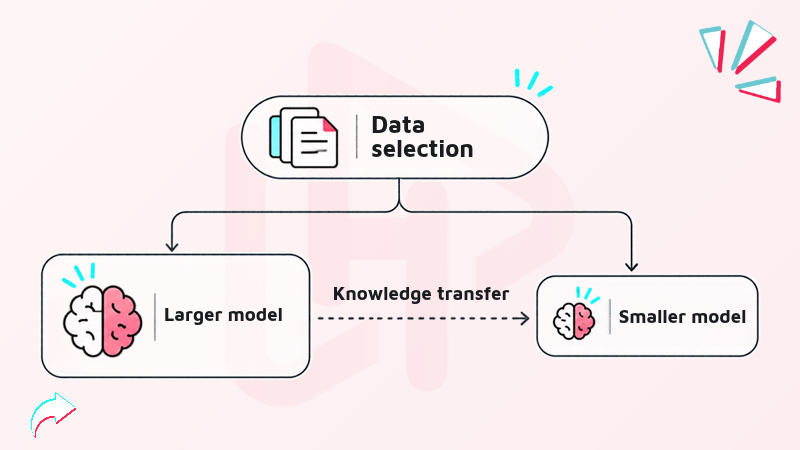
- Model-size comparisons, training-data selection and knowledge distillation helped smaller models approach the quality of larger ones.
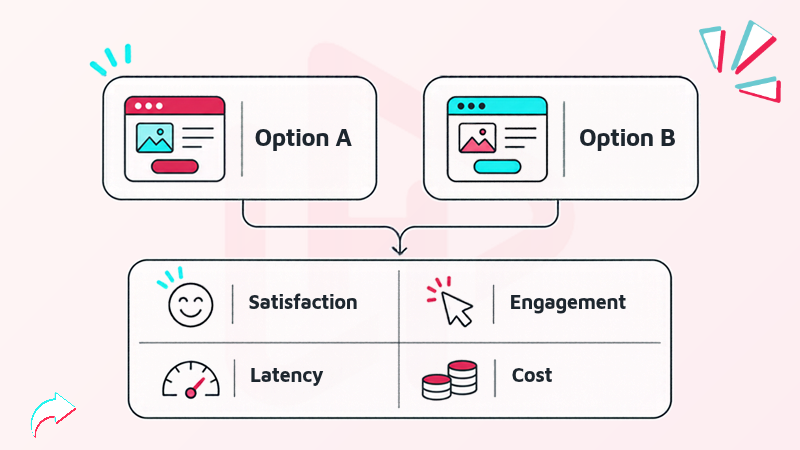
- A/B tests considered search satisfaction and long-term engagement alongside latency and infrastructure cost; no numerical uplift was disclosed.
1. How TikTok Search turns a short query into results
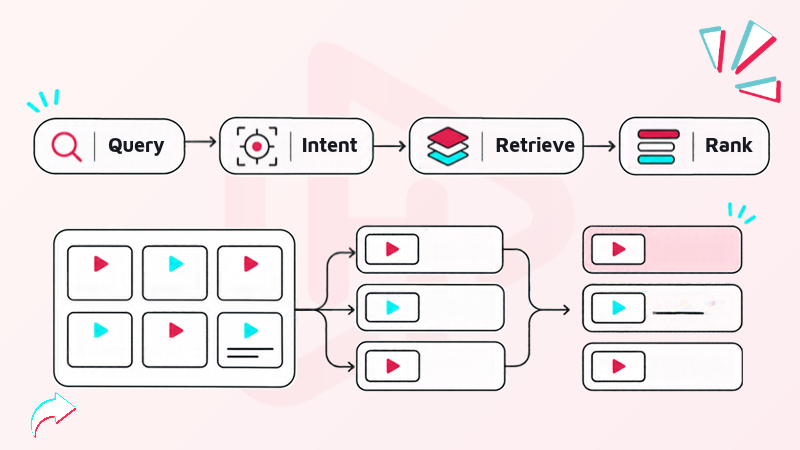
A search may contain only a few words, yet the service has to decide what the person intends to find. TikTok’s engineering account describes a chain of decisions: interpret intent, retrieve candidate content, and rank the most relevant results. Each stage matters because the experience must feel immediate.
1.1. Understanding intent beyond the literal keywords
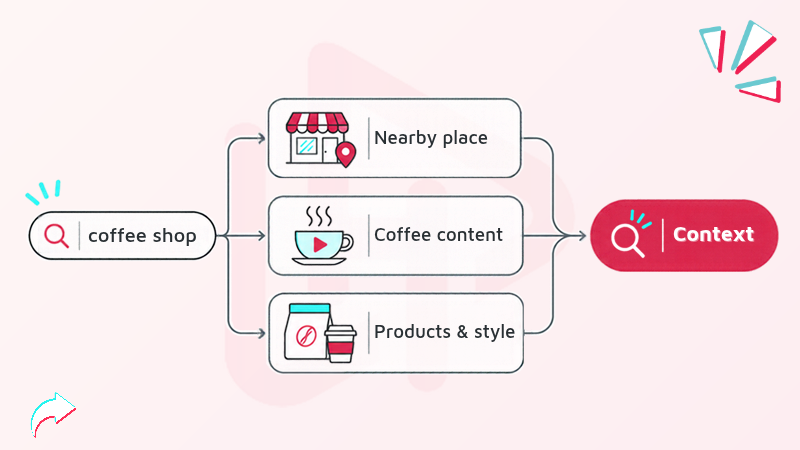
A typed phrase is not the same as a complete description of a person’s information need. Someone searching for “coffee shop” might want a nearby place, preparation tips, creator recommendations, or examples of a particular visual style. The query alone does not settle that question. This example illustrates ambiguity; it is not a disclosure of TikTok’s internal intent-classification rules.
The engineering challenge is therefore to interpret what the query means in context rather than simply match a string. TikTok says the system must understand user intent while handling changing topics and trends. That requirement makes relevance more than a matter of how frequently a phrase appears in a video title or caption.
1.2. Retrieving candidates and ranking relevant content
After interpreting a query, a search service needs a set of possible results and then a way to order them. TikTok’s field notes explicitly describe candidate retrieval followed by relevance ranking. These are related but distinct tasks: retrieval brings options into consideration; ranking decides which should appear first for a particular search.
The challenge becomes sharper when a system must respond within milliseconds. A richer understanding step is useful only if it can operate alongside retrieval and ranking under real serving conditions. The supplied field notes do not disclose a complete production architecture, model names or exact response-time benchmarks, so the pipeline here is a conceptual explanation rather than a specification of TikTok’s live stack.
2. Multimodal information makes search both richer and harder
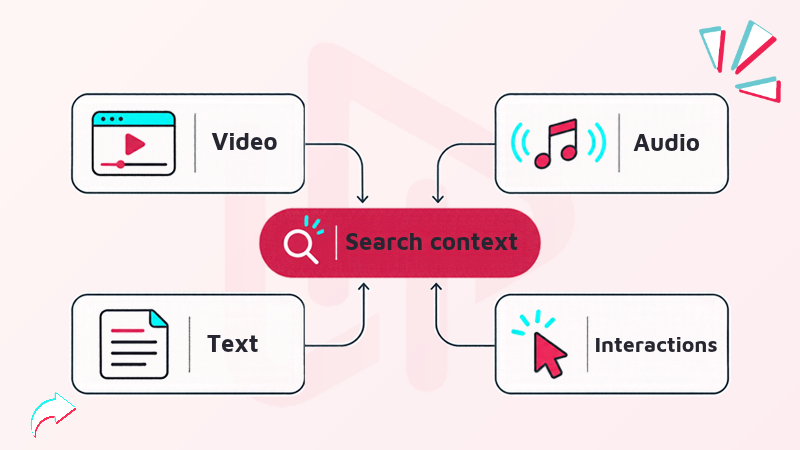
TikTok Search operates over content that cannot be described by a single text field. Its engineering post names video, audio, text and user interactions as information the search system must consider. These signals can provide different clues about what a piece of content covers and why it might satisfy a particular request.
- Video: Visible scenes, actions and objects can convey subject matter that a short caption leaves unstated.
- Audio: Spoken explanations, music and other sounds add another layer of content meaning.
- Text: Queries, captions and text displayed in videos can clarify terminology and intent.
- Interactions: User behavior contributes a further dimension to relevance and personalization.
These are signal categories described by TikTok, not a published list of ranking weights. The original post also emphasizes that new trends emerge continuously and that results need to suit different people. Combining information at that scale is a systems problem: semantic understanding, relevance, freshness and efficient delivery need to work together.
For content teams, the reasonable lesson is to make a video’s subject understandable across its available elements. It would be unsupported to claim that any one element, such as spoken keywords or on-screen text, has a newly announced ranking boost.
Read more:
TikTok — Engineered, for you: Field notes by Tong
3. Why TikTok’s engineers are exploring LLM-powered search
Tong’s team is helping move TikTok Search toward an LLM-powered approach. The wording matters: this is a direction of engineering work described by the company, not confirmation that every search request now uses one particular large language model. The motivating problem is how to recognize needs that do not closely resemble familiar historical examples.
3.1. Moving beyond patterns observed in past searches
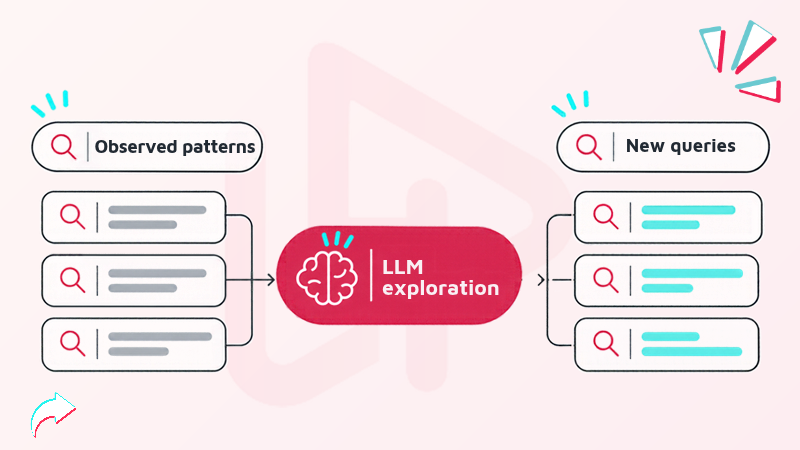
TikTok contrasts traditional approaches that rely heavily on previously observed patterns with the potential of LLMs to generalize to unfamiliar queries and content. In practical terms, a search system needs to remain useful when people start asking new questions, when creators introduce unfamiliar topics or when the language around a trend changes.
Generalization is valuable because a live platform never sees precisely the same mix of interests twice. But a model’s ability to reason about more varied inputs is not sufficient by itself: it still has to serve useful results to real people. The field notes describe this as an engineering effort to better understand users’ actual needs, rather than an announcement that keyword-based retrieval has disappeared.
3.2. Choosing training data and using knowledge distillation
The team compared model sizes and used careful training-data selection and knowledge distillation to help smaller models approach the quality of larger ones. Knowledge distillation is a model-development approach in which information from a more capable model guides a smaller model. In this article, that definition explains the general technique; TikTok has not provided the particular teacher–student setup or hyperparameters used by Tong’s team.
This direction matters because production search is constrained by deployment resources. A model with strong offline quality can still be unsuitable for high-volume use if its serving requirements are too expensive or slow. Smaller models may offer a more workable operating point, provided experiments show they meet the product’s actual quality requirements.
The case should not be confused with a public model release or a published benchmark. TikTok did not disclose parameter counts, exact model architectures, or how much any individual technique improved relevance.
4. The real decision is relevance, latency, and cost
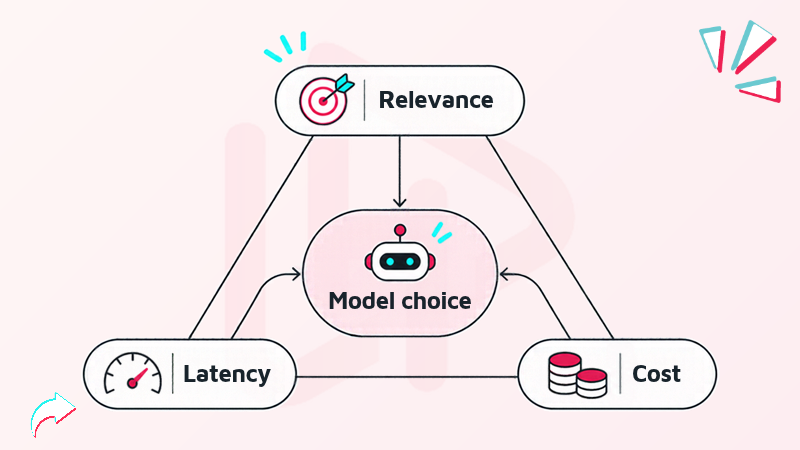
The central takeaway from TikTok’s engineering story is an optimization principle, not a larger-is-better contest. The team assessed different models against user outcomes and operating constraints. That makes the choice a product and infrastructure decision as much as a machine-learning decision.
4.1. Why a larger model can be the wrong production choice
A larger model may improve quality or reasoning, but it can also require more compute, increase latency and raise serving costs. If people have to wait longer for results, a quality gain measured offline might not translate into a better experience. Conversely, reducing cost at the expense of useful answers could also be a poor choice.
The objective is therefore to find a model configuration that delivers sufficient relevance within acceptable performance and resource constraints. TikTok’s source describes this trade-off qualitatively. It does not provide a universal latency threshold, a target price per query, or evidence that smaller models always outperform larger ones.
4.2. A/B testing puts user impact ahead of model size
According to the field notes, the team evaluated options through A/B experiments, considering satisfaction with search results and longer-term search engagement alongside latency and infrastructure cost. The team reports improved search relevance and overall user experience, but does not supply the magnitude, sample size, confidence level or dates of those results.
| Evaluation dimension | Question it helps answer | Evidence boundary |
|---|---|---|
| Search satisfaction | Do users find results helpful? | Mentioned, no score published |
| Longer-term search engagement | Does the experience remain useful over time? | Mentioned, no uplift published |
| Latency | Can results arrive quickly enough? | Considered, no timing benchmark |
| Infrastructure cost | Is the option viable to serve at scale? | Considered, no cost figure |
That distinction matters when translating technical storytelling into business claims. A positive description of search quality is not evidence of a specific increase in advertising conversions, merchant sales or organic visibility. The source does not provide those outcomes.
Read more:
TikTok — Engineered, for you: Field notes by Tong
5. What content and marketing teams can responsibly do
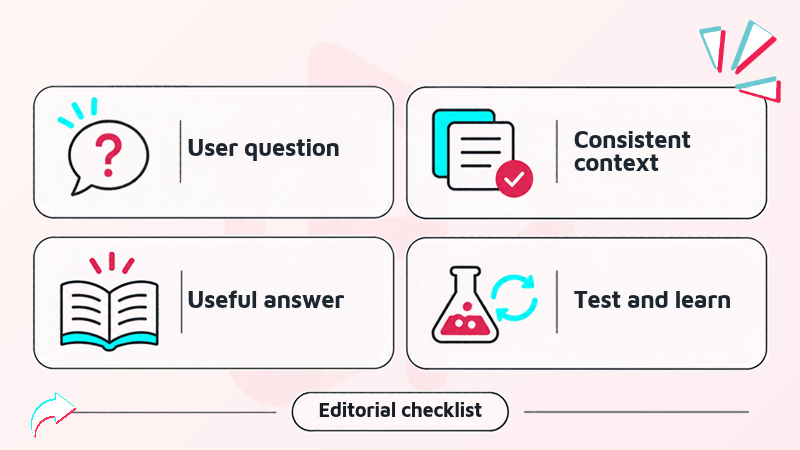
H2T Media Group interprets this engineering account as a reason to evaluate content around user intent and comprehensibility, not as a new TikTok SEO ranking rule. A practical audit can begin with four questions:
- What question does the content answer? Write down the viewer’s likely need before drafting the hook.
- Can the topic be understood across formats? Review whether the visuals, spoken explanation and relevant written text communicate a consistent subject.
- Is the answer genuinely useful? Check clarity, specificity and whether the video delivers what its opening promises.
- What can be tested? Compare content variants and observe relevant discovery, engagement and business measures without assuming a causal ranking change.
This checklist is an H2T Media Group editorial recommendation, not an official list of TikTok ranking factors. It also does not establish that matching captions and audio is a guaranteed optimization technique. The goal is to make content easier for people to interpret and to test hypotheses carefully.
For a different perspective, the existing analysis of Community Intelligence for TikTok creative planning addresses advertiser inputs and AI-assisted content workflows. Separately, TikTok Smart Plus campaign automation concerns paid-media systems. Neither should be presented as proof that TikTok’s organic Search engineering work directly changes Search Ads delivery or performance.
6. Frequently asked questions
The source says Tong’s team is helping move search toward an LLM-powered approach. It does not confirm a complete platform-wide deployment or identify every model in production.
No. TikTok describes a trade-off between model quality, response latency and infrastructure cost. The best model depends on the user value and resources involved.
Not in these field notes. Video, audio, text and interactions are discussed as information the system handles, but no new ranking formula or weighting is published.
No such uplift is reported in the source. The documented evaluation focuses on search satisfaction, longer-term engagement, latency and cost, not advertiser performance.
Conclusion
TikTok Search LLM work illustrates a larger engineering reality: high-quality search depends on interpreting intent and serving relevant results within latency and cost constraints. TikTok’s field notes describe promising work on model selection and evaluation, but not a new universal ranking rule. Content teams should improve clarity, test genuine user value and keep promotional claims separate from disclosed evidence.
For more platform analysis, explore the Insights hub at H2T Media Group. Continue the discussion with H2T Media Group on Facebook and H2T Media Group on LinkedIn.

bichthao
H2T Media Group decodes every meaningful platform update for advertisers and affiliate partners across APAC, EU and North America — always with a practical "H2T take" you can act on.
More about H2T →