


Google Data Strength and Meridian updates 2026 bring a wider first-party data workflow, a new conversion-recovery metric, and open-source tools for testing the incremental impact of advertising. Google announced the main measurement changes on September 10, 2026, then clarified several rollouts in its October 13 Demand Gen update.
This H2T Media Group analysis separates what was announced, what is available, and what advertisers should verify before changing their measurement stack.
 Key Takeaways
Google Data Strength and Meridian updates 2026 connect Data Manager improvements and the Data Strength Uplift metric with new Meridian modeling features and the global availability of Meridian GeoX.
Essential facts about the updates
- Google announced expanded Data Manager integrations for Google Analytics and Display & Video 360.
- The universal Data Manager API uses the IAB Tech Lab Event and Conversions API (ECAPI) standard.
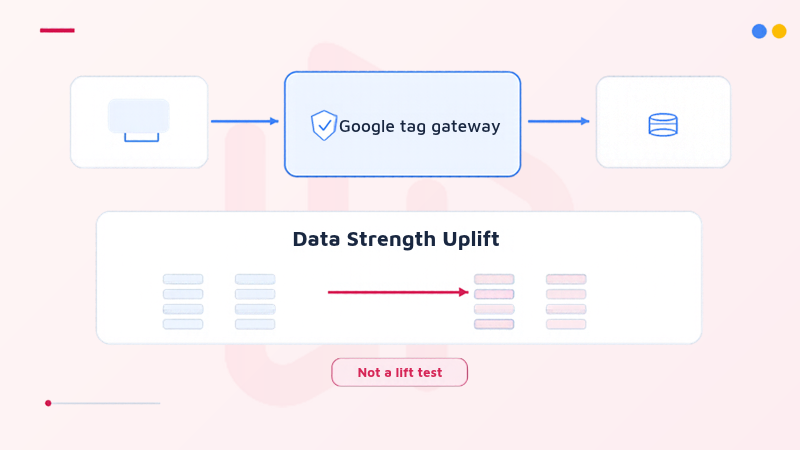
- Data Strength Uplift estimates additional conversions recovered through a first-party data configuration; it is not a geo-lift experiment.
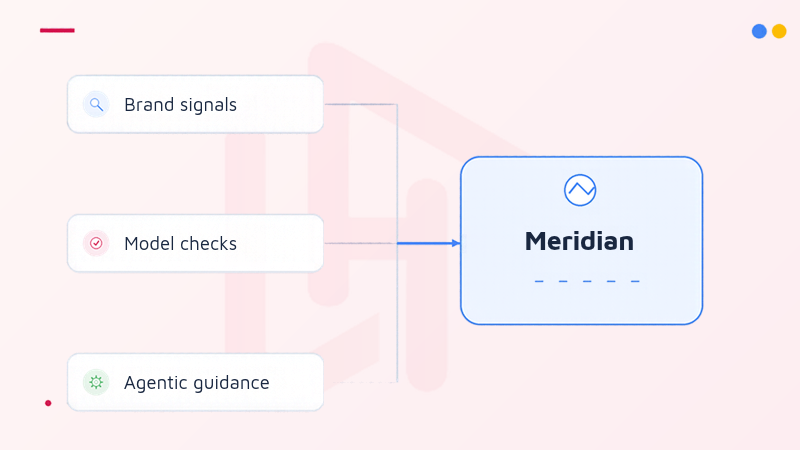
- Meridian updates cover model-building assistance, brand signals, and faster processing.
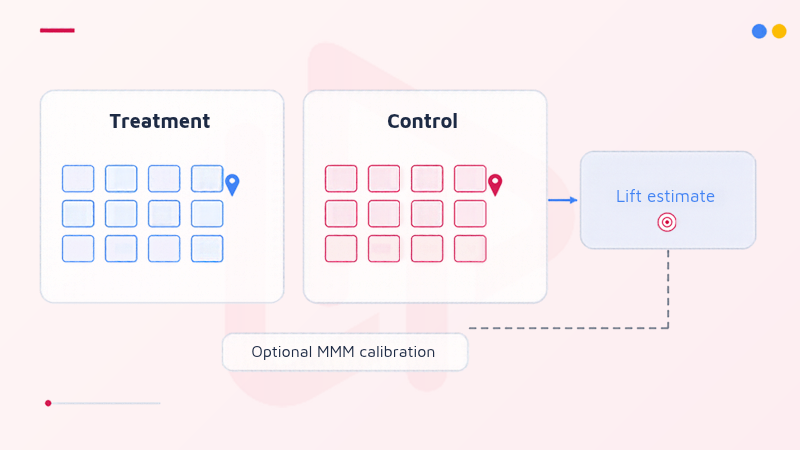
- Meridian GeoX became generally available globally for geo-experimentation and optional MMM calibration.
1. What Google announced and when
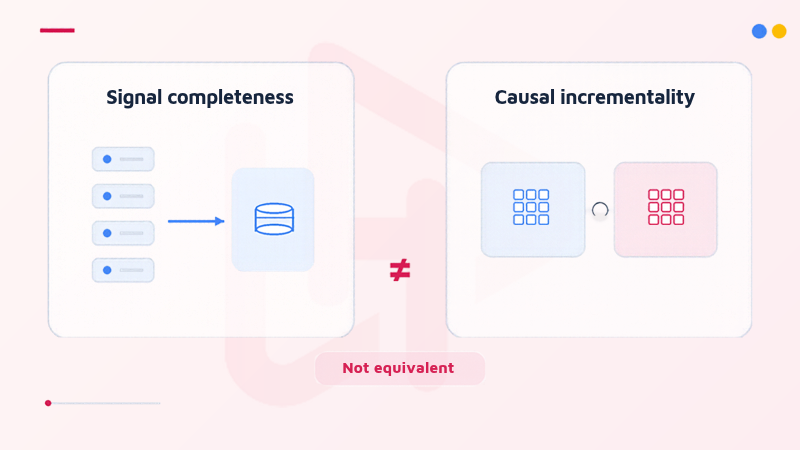
The September release connects two different measurement decisions: improving the completeness of conversion signals and testing whether marketing actually creates additional business outcomes. These changes should not be treated as one compulsory installation or a single feature release date.
1.1. The September announcement and October clarification
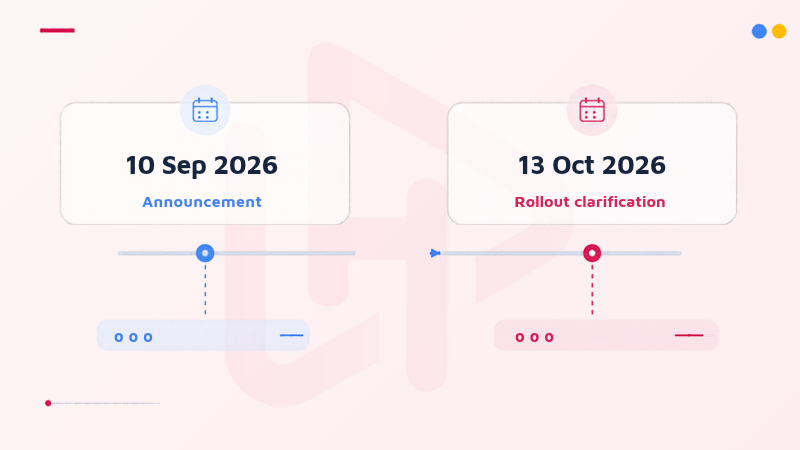
On September 10, 2026, Google described Data Manager expansion, a universal API built around ECAPI, the Data Strength Uplift metric, Meridian model improvements, and the general availability of Meridian GeoX. On October 13, Google revisited data-strength improvements in Demand Gen Drop #14 and described the Uplift metric as launching, Data Manager as expanding, and enhanced conversions in Google Analytics and DV360 as coming soon.
For an article published on October 26, these are September and October product announcements – not features all introduced on October 26. Account availability, region, permissions, and rollout stage should be checked rather than assumed.
Read more:
Google — Drive profitable growth with new data and measurement tools
Google — October 2026 Demand Gen Drop
1.2. Two measurement questions, not one dashboard
Signal completeness asks whether consented website, app, and offline events reach the appropriate measurement systems with correct identifiers and diagnostics. Incrementality asks what business outcome would have occurred without the advertising intervention. Better conversion coverage can support campaign reporting and optimization, but extra recorded conversions do not automatically prove that an ad caused extra sales.
This distinction matters when presenting results to finance teams. Platform-reported conversions, experimentally measured lift, and aggregate marketing-mix estimates answer related but different questions; none should be substituted for the others without a clear method.
2. Data Strength updates: connect and evaluate first-party signals
Google’s data-strength work extends beyond website tagging. It brings customer-data connections, APIs, diagnostics, and measurement feedback into a more consistent operating model across participating Google platforms. The practical focus is data quality and permissioned activation rather than the sheer quantity of events collected.
2.1. Data Manager expands into Analytics and DV360
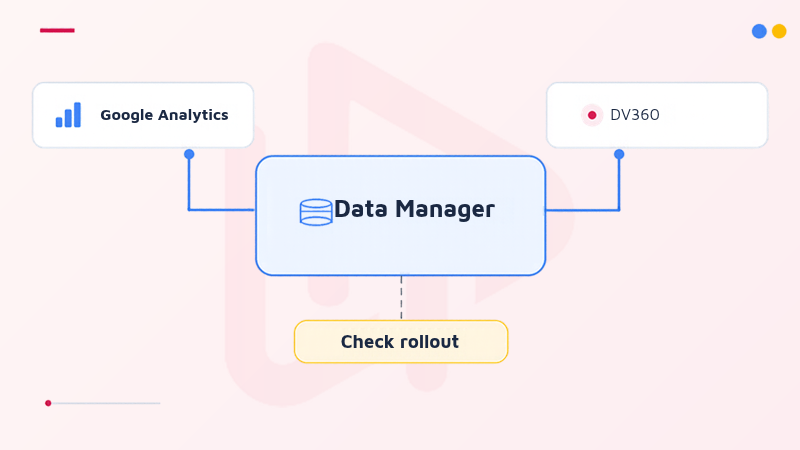
Google announced direct Data Manager integration with Google Analytics and Display & Video 360 (DV360), expanding where teams can connect and activate first-party data. It also announced enhanced conversions for these products; the October update explicitly characterized availability there as forthcoming. Teams should confirm whether the required connector and enhanced-conversion workflow are enabled in their own accounts.
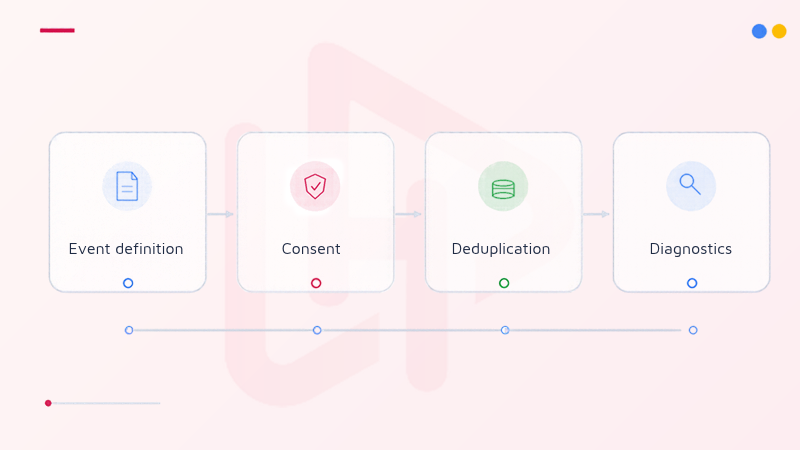
Data Manager can reduce fragmentation across CRM, app, and offline measurement workflows. It does not remove responsibility for consent, source mapping, field validation, deduplication, data freshness, or access controls. A connector should be considered production-ready only after the destination account’s diagnostics and real event flows have been checked.
2.2. Universal Data Manager API and data diagnostics
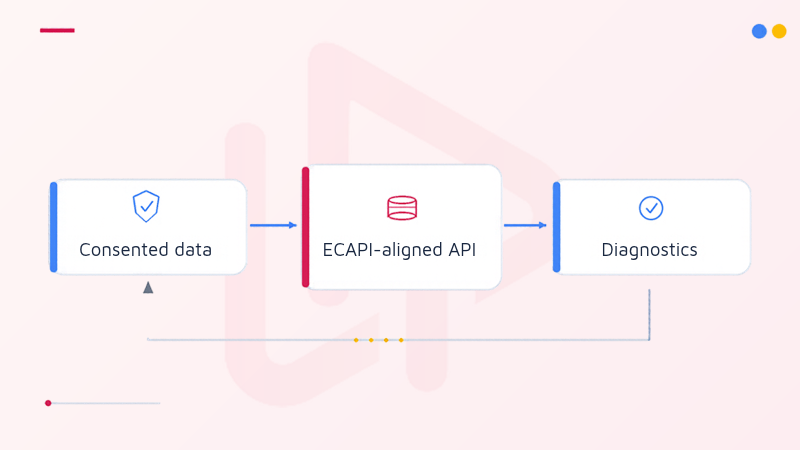
Google said the Data Manager API is now universal and based on the IAB Tech Lab’s Event and Conversions API (ECAPI) standard. The goal is a more consistent method of connecting and activating audiences and measurement data across supported advertising systems. The release also described diagnostics that identify data issues before they affect campaign performance.
Operational implication: compare supported destinations, authentication, consent fields, event schemas, and error reporting against the current integration architecture. “Universal” should not be read as automatic compatibility with every CRM or a guarantee that any dataset can be uploaded without engineering work.
2.3. Data Strength Uplift and Google tag gateway
The new Data Strength Uplift metric is designed to quantify additional conversions recovered or reported through an advertiser’s first-party data setup in Google Ads. It gives teams a way to evaluate the measurement contribution of their configuration; it is not a randomized counterfactual experiment and should not be labeled incremental revenue.
Google tag gateway for advertisers lets existing Google tags be served through an advertiser’s first-party website infrastructure, using supported client-side or server-side approaches. It can improve signal resilience, but it does not guarantee that all blockers are bypassed, all events are captured, or any fixed match rate is reached. Google’s October note again connected tag gateway adoption with reported Demand Gen uplift, subject to the study population and dates.
Read more:
Google Ads Help — Google tag gateway for advertisers
Google — Data Strength rollouts in Demand Gen Drop #14
3. Meridian updates: improve models and test causality
Meridian is Google’s open-source marketing mix modeling (MMM) framework. Its September enhancements address model construction and how experimental evidence can inform aggregate budget decisions. This differs from individual conversion tracking: MMM models broader business response from aggregated inputs, while controlled experiments can test specific causal questions.
3.1. Agentic guidance, branded search signals and faster modeling
Google outlined agentic assistance to help practitioners check data quality, troubleshoot errors, and build Meridian models. It also described backend performance upgrades intended to make analysis and optimization faster. These are workflow and computational improvements, not proof that every generated model will be valid or that marketers no longer need statistical review.
Meridian can now incorporate relevant brand signals, including Branded Google Query Volume, to help represent the longer-term effect of brand investment. A model that includes these signals still depends on suitable data, assumptions, diagnostics, and sensitivity analysis. Reported associations should not be automatically interpreted as experimental proof.
Read more:
Google — The next era of Meridian measurement
3.2. Meridian GeoX is globally available for geo experiments
Google announced global general availability for Meridian GeoX, an open-source library for geographically designed incrementality experiments across advertising platforms. Supported approaches include holdback, go-dark, and heavy-up designs, with single-cell or multi-cell study configurations. GeoX can be used independently; qualifying experiment results may also inform Meridian model priors.
Experiments require a defensible geographic split, appropriate historical KPI data, enough statistical power, and disciplined campaign execution. A poorly controlled test cannot establish causality just because it uses a geo-testing library. GeoX does not automatically remove wasted spend or guarantee improved ROAS.
Read more:
Google for Developers — Introduction to Meridian GeoX
Google — Meridian GeoX open-source repository
4. What the published uplift figures actually measure
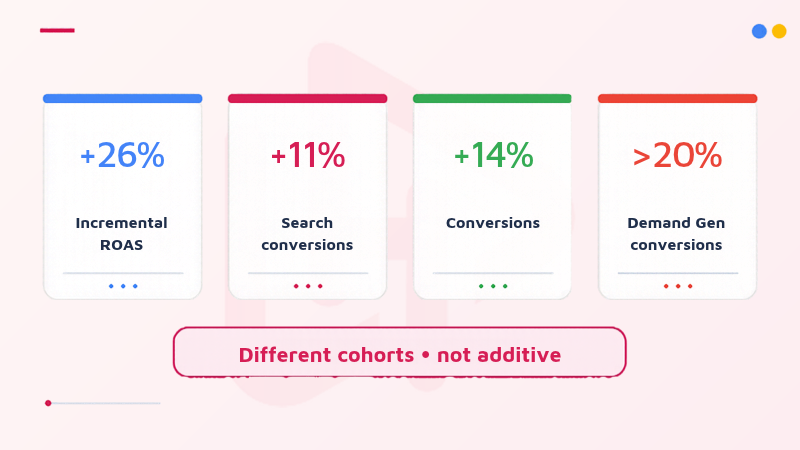
Google’s September announcement reports four results from different internal datasets, periods, and comparison groups. They should remain separate in reporting and must not be added together or applied as guaranteed outcomes for a new advertiser.
| Google-reported figure | What the comparison concerns | Evidence scope disclosed by Google | Interpretation limit |
|---|---|---|---|
| 26% average increase in incremental ROAS | Advertisers connecting offline and app data to Data Manager | Global measurement data, April 2025–April 2026; Search campaigns bidding to conversion value | Not a guaranteed ROAS increase for every account |
| 11% average increase in Search conversions | Enhanced conversions on imported conversions vs. standard conversion imports | Google internal global Ads log data, January 1–14, 2026 | Not proof of 11% additional underlying sales |
| 14% average conversion uplift | Advertisers using Google tag gateway as described in Google’s analysis | Google internal global Finance data comparing July–December 2024 with January–June 2025 | Cannot be generalized without cohort and method details |
| Over 20% average Demand Gen conversion uplift | Advertisers building data strength with Google tag gateway | Google global performance data, June 3–17, 2026 | Demand Gen-specific; not a Qualified Future Conversions result |
These are Google-reported findings, not independent guarantees or estimates of what a particular brand will gain. In particular, the new Data Strength Uplift interface and an incrementality experiment are not interchangeable measures. For causal decisions, define the outcome and use a suitable controlled design rather than treating better event recovery as incremental demand.
Read more:
Google — September measurement announcement and methodology notes
5. Practical priorities for advertisers and measurement teams
Not every advertiser needs to implement every announced capability at once. The sensible next step depends on which measurement decision is currently blocked: incomplete conversion records, a fragmented activation pipeline, unverified incremental lift, or weak long-term budget modeling.
5.1. Audit data quality before changing attribution assumptions
Start with a focused inventory of conversion events and their data path:
- Identify the business KPI and the event definitions used in Google Ads, analytics, CRM, and finance reporting.
- Check consent and privacy requirements, event duplication, missing values, and offline upload latency.
- Review whether Data Manager integrations, diagnostics, tag gateway, and Uplift reporting are available in the relevant accounts.
- Record a baseline for valid events and reporting coverage before making configuration changes.
A measurement recovery project should produce reproducible QA results, not a promise of a particular uplift percentage. Avoid treating every discrepancy as data loss; definitions, attribution windows, and reporting time can also differ.
5.2. Match each business question to the right evidence
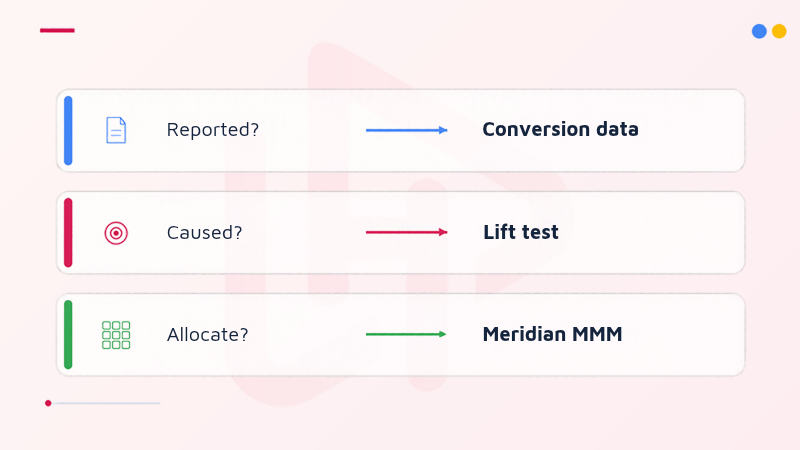
Use an explicit decision hierarchy. Conversion reporting helps with operational campaign feedback. A controlled lift study tests whether the campaign generated additional outcomes. Meridian MMM can support broader media-mix assessment when sufficient historical data and modeling expertise are available. GeoX may provide calibration evidence for Meridian, but only when the experiment design and resulting data are suitable.
- Immediate: verify consented signals, connector scope, and event QA.
- Next: test the availability and interpretation of Data Strength Uplift without labeling it causal lift.
- Then: plan incrementality testing or MMM when the decision and data justify the effort.
For a broader archive of platform changes, H2T Media Group maintains its Google Ads coverage. Detailed method-selection guides should remain separate evergreen resources rather than expanding this announcement into a generic measurement-tools list.
6. Frequently asked questions
These questions clarify the scope and evidence limits of the announcements. Availability and account eligibility may change as Google completes individual product rollouts.
No. It describes additional conversions recovered or reported through a first-party data setup. Causal incrementality requires a defensible counterfactual, such as a controlled experiment.
The October 13, 2026 Google update says enhanced conversions will soon be available there. Verify rollout and eligibility in each account instead of assuming universal activation.
No. GeoX supports independent geographic experiments; suitable findings can optionally calibrate Meridian models through experiment-informed priors.
No. Google reports average uplift for studied groups, but individual results depend on site infrastructure, consent, existing measurement quality, traffic, and implementation.
Conclusion
The most useful response to the Google Data Strength and Meridian updates 2026 is not a blanket migration. Confirm the status of relevant Data Manager features, audit the quality of first-party signals, and choose the right method before claiming advertising incrementality. H2T Media Group will continue tracking the rollout through its Google Ads category and the broader Insights hub. For ongoing analysis, connect with H2T Media Group on Facebook and follow H2T Media Group on LinkedIn.

bichthao
H2T Media Group decodes every meaningful platform update for advertisers and affiliate partners across APAC, EU and North America — always with a practical "H2T take" you can act on.
More about H2T →