

Google Asset Studio multimodal video rollout brings Gemini Omni-powered narrative video creation into Google Ads, helping advertisers turn brand inputs and existing assets into storyboards and video variations. First previewed in May 2026 and confirmed as generally available in August’s Demand Gen Drop #12, the capability addresses creative production friction rather than guaranteeing stronger campaign results.
H2T Media Group examines the announcement, supported workflows, access conditions, and the questions advertisers should resolve before using it.
 Key Takeaways
Google Asset Studio multimodal video rollout – Google made Multimodal Video Creation in Asset Studio generally available in its 27 August 2026 Demand Gen Drop #12, bringing Gemini Omni-led storyboarding and video creation into a Google Ads workflow.
Essential facts about this update
- Google previewed expanded Asset Studio capabilities in May 2026, detailed Gemini Omni in August, and confirmed general availability in Demand Gen Drop #12.
- Inputs can include a website URL, marketing brief, brand guidelines, product images, and existing assets.
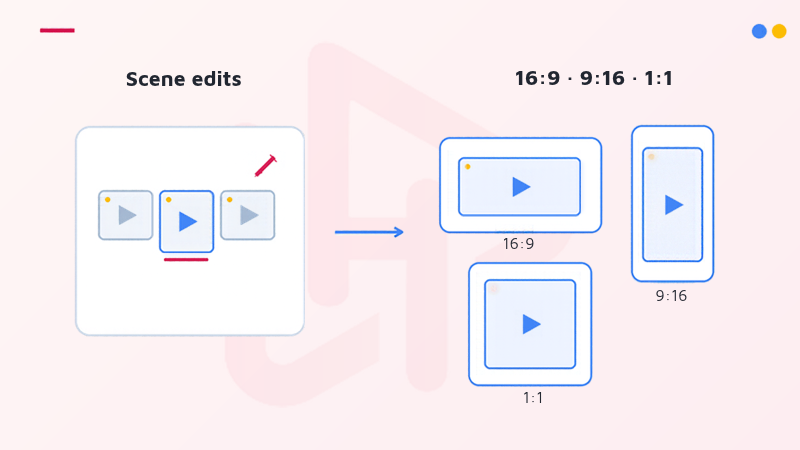
- The workflow supports narrative storyboards, scene refinement, and horizontal, vertical, and square video output.
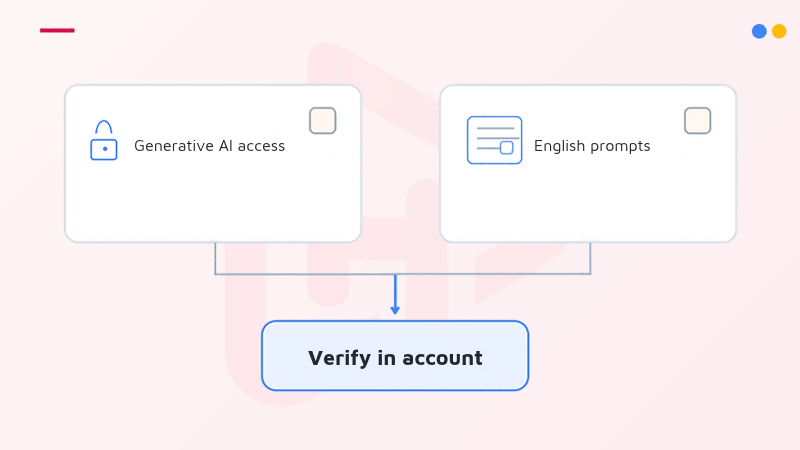
- Google Ads Help currently states that prompts and model understanding support English and require access to generative AI features.
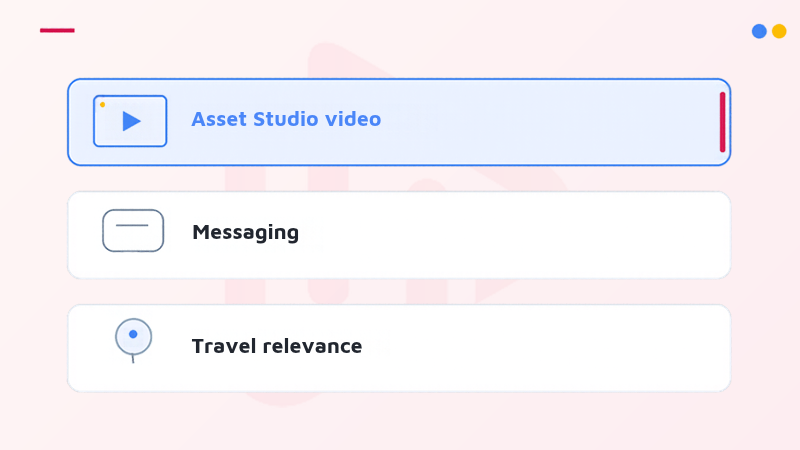
- Messaging and travel-feed announcements belong to the broader Drop #12 release, not the core Asset Studio feature.
1. What Google announced and when
The Asset Studio story spans several announcements, so the date of an early preview should not be mistaken for the general-availability milestone. Separating these stages is especially important for marketers deciding whether a feature was simply announced or was described as available to advertisers at a particular point.
1.1. From May preview to August general availability
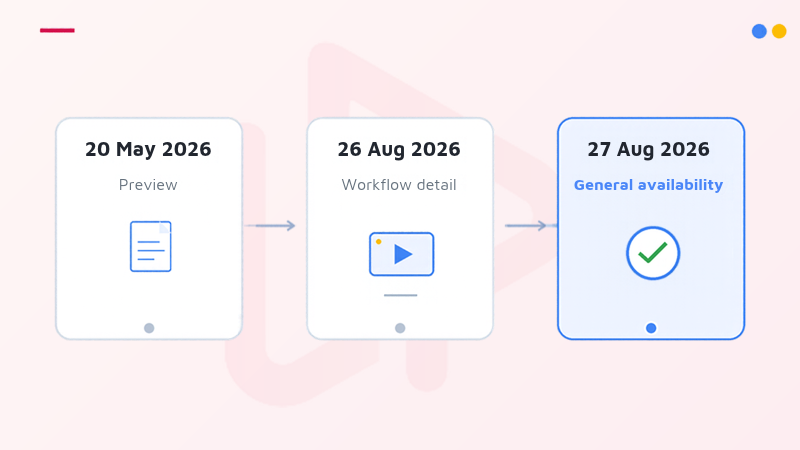
On 20 May 2026, Google described an upgraded Asset Studio that could interpret marketing briefs, brand guidelines, websites and objectives, then generate and refine assets with natural-language instructions. The company said Gemini Omni-powered video creation was coming, with new capabilities rolling out globally in English during the summer. That post was an announcement of the roadmap, not evidence that every account could use every function that day.
On 26 August, Google presented a more concrete Gemini Omni video workflow: bring in brand references, develop storyboard concepts, refine individual scenes with prompts and package multi-format outputs. The following day, Demand Gen Drop #12 explicitly stated that Multimodal Video Creation in Asset Studio was generally available. That 27 August statement is the clearest rollout milestone for this article.
Read more:
Google — Asset Studio brings new multimodal capabilities
Google — From brief to on-brand video in Asset Studio
Google — August Demand Gen Drop #12
1.2. What general availability does – and does not – mean
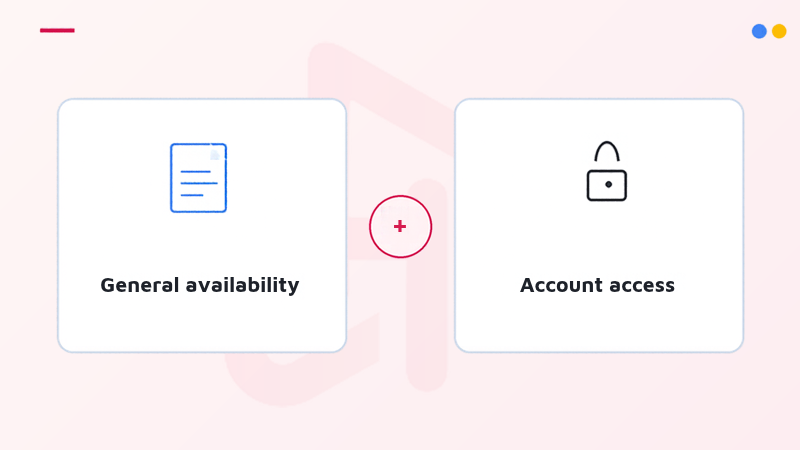
General availability describes Google’s product release status; it is not proof that all menus, languages, integrations or account permissions behave identically in every environment. The feature still depends on the Google Ads generative-AI access conditions described in Help documentation. Teams should distinguish Google’s published product scope from what is visible in their own account, especially when assessing international campaigns.
2. How Gemini Omni changes the Asset Studio workflow
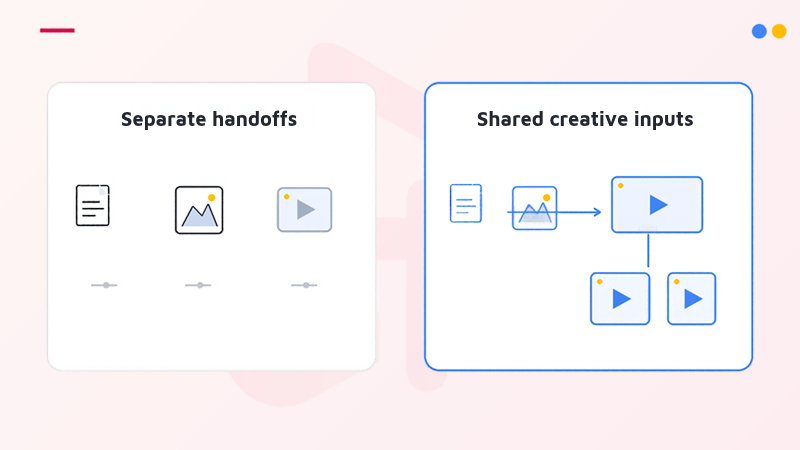
The distinguishing change is not merely text-to-video generation. Google positions Gemini Omni as a multimodal creative system that can combine business context, visual references, and an advertiser’s brand rules, then carry those inputs from ideation into editable video narratives. This reduces handoffs between otherwise disconnected concept, asset and video workflows.
2.1. Brand context, references and narrative concepts
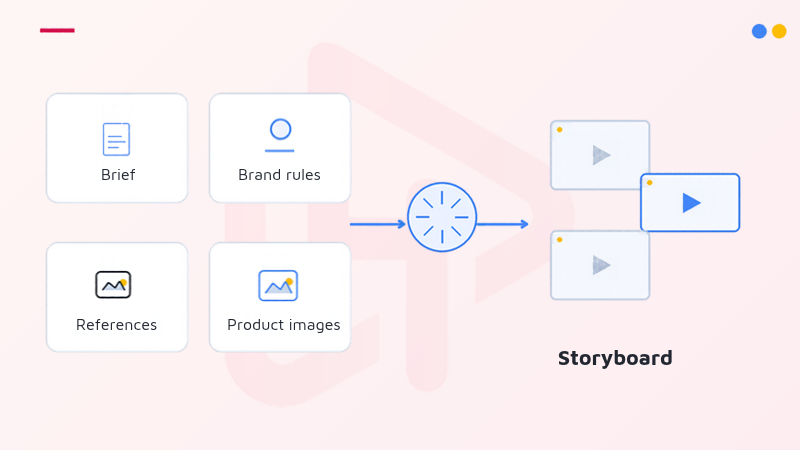
An advertiser can provide a landing-page URL, product photography, campaign context and creative guidance. Google’s September Creative Drop elaborates that reference materials may include a marketing brief, existing video clips and brand guidelines. In Asset Studio, these inputs help shape narrative concepts and storyboard choices rather than functioning as a promise that every generated scene will be error-free.
The documented video flow starts with selecting a creative source, such as an ad group or landing page, then refining the brief, choosing a narrative direction, and editing storyboard scenes. Google also documents a broader multi-asset project pathway that can produce text, image, and video concepts from a shared prompt. Those are distinct creation paths, not a mandatory sequence every campaign must follow.
Read more:
Google — Gemini Omni Creative Drop #1
Google Ads Help — Create assets with prompts in Asset Studio
2.2. Scene editing and multi-format output
Within the storyboard flow, teams can adjust visual references, voice-over scripts and scene directions before reviewing the resulting video. Google’s product materials describe horizontal 16:9, vertical 9:16, and square 1:1 formats. The August Drop highlights horizontal and vertical production because this variety helps advertisers supply creative across Demand Gen placements, including YouTube surfaces.
Multiple output ratios improve placement coverage, but an automatically resized scene should still be checked for text legibility, product visibility, cropping, and a clear call to action. These checks are H2T Media Group’s editorial recommendation, not additional capabilities or performance outcomes promised by Google.
Read more:
Google — From brief to on-brand video in Asset Studio
Google — Gemini Omni Creative Drop #1
3. Availability, compatibility and review requirements
Public launch announcements and platform documentation answer different questions. Google’s release post establishes that the feature reached general availability, while Help material describes how a user with appropriate access can create assets. Both are necessary to make an accurate claim about rollout status without overgeneralizing eligibility.
3.1. Access requirements and English-language prompts
Google Ads Help states that creating assets with a prompt requires general access to Google Ads generative AI features. It also specifies that English is currently the supported language for prompts and model understanding. Advertisers should therefore verify the available Asset Studio options within their account rather than treating “global rollout” as a guarantee of every language or control.
The official Help documentation describes two entry points: standalone narrative video creation and a multi-asset project experience. It also documents options for saving or uploading video to a linked YouTube destination before adding it to a campaign. Interface wording can change over time, so this article reports supported pathways rather than reproducing a click-by-click tutorial.
Read more:
Google Ads Help — Create assets with prompts in Asset Studio
3.2. Campaign use and human quality control
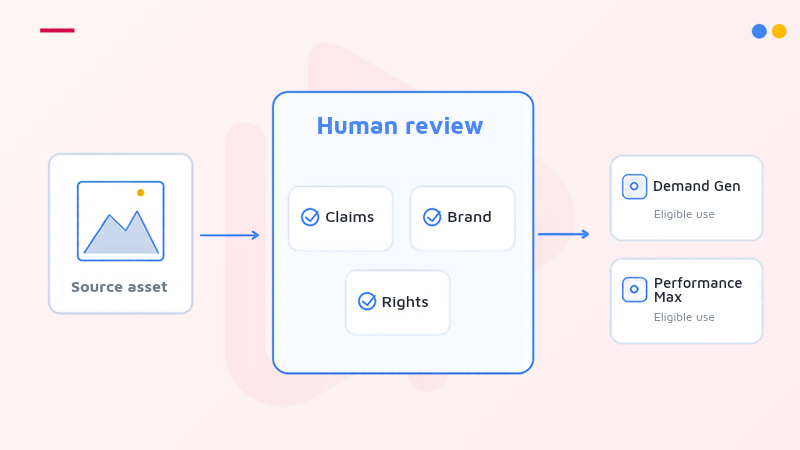
Google describes Gemini Omni outputs as usable for Demand Gen and other eligible Google or YouTube campaigns, including Performance Max. That does not mean one creative file or set of assets should be deployed unchanged everywhere. Placement, campaign objective, and creative requirements still determine which variants are appropriate.
Before activation, H2T Media Group recommends a human review of product attributes, claims, logos, typography, licensing, spoken copy, and policy-sensitive visuals. Teams should document the source assets and approval owner. These are practical governance safeguards proposed by H2T Media Group, not a statement that Google guarantees all generated outputs will be brand-safe or policy-approved.
Read more:
Google — From brief to on-brand video in Asset Studio
Google Ads Help — Create assets with prompts in Asset Studio
4. Asset Studio versus the other Demand Gen Drop #12 updates
The August release contained several different product developments. Messaging-led lead generation and travel-related ad relevance were announced alongside Asset Studio, but they solve different advertiser problems. Keeping those boundaries visible prevents a feature-specific news article from repeating an entire Demand Gen update roundup.
| Announcement | Primary purpose | Scope of this article |
|---|---|---|
| Multimodal Video Creation in Asset Studio | Create and refine narrative video assets using Gemini Omni | Primary subject: capabilities, rollout and restrictions |
| Messaging from Demand Gen ads | Test direct conversations between viewers and brands | Context only; no claim of universal availability |
| Travel activities and hotel relevance | Surface relevant local activities, events and offers | Context only; covered by broader Drop #12 reporting |
For a broader inventory of the release, see H2T Media Group’s Demand Gen Drop #12 analysis. The Asset Studio rollout deserves a separate page because the underlying search question concerns creative production and feature access – not the complete set of August product announcements.
Read more:
Google — August Demand Gen Drop #12
5. What creative and measurement teams should take from the rollout
The strategic consequence is a faster route from marketing inputs to multiple video concepts, subject to the quality of source material and human review. That is useful for media teams facing a shortage of placement-ready video. The change should nevertheless be assessed as a workflow capability before it is framed as a business-performance improvement.
5.1. A narrower creative production bottleneck
Asset Studio can help teams reuse existing photography, briefs and approved brand elements to explore narrative routes without starting every variation from a separate production request. The value lies in faster ideation, consistent inputs and more format options. Whether the final assets are commercially effective still depends on offer clarity, audience relevance, production judgment and campaign conditions.
Creative teams can treat AI outputs as candidates for approval rather than final authority. A concise review record covering original inputs, selected scenes, requested changes and final asset ownership will make revisions traceable when several brands or agencies share the same Google Ads environment.
5.2. Keep creative benchmarks separate from product claims
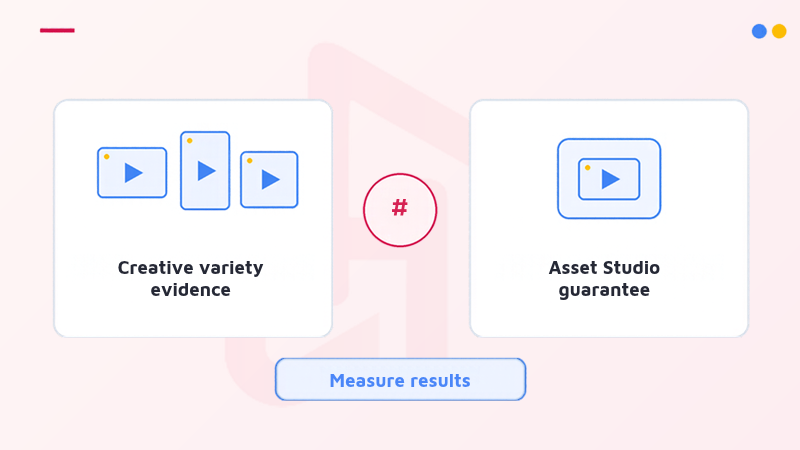
Google later reported that advertisers adopting creative variety across horizontal, vertical and square formats saw more than 23% higher conversions on average in an analysis covering September 2025 to May 2026. That observation concerns a broader creative-variety practice; it does not isolate Gemini Omni, prove causality for an individual account, or guarantee a 23% increase after using Asset Studio.
A sound measurement plan should compare approved creative variations under defined campaign conditions and examine conversion quality, cost, and downstream value – not simply count how many AI-generated videos were produced. The decision to expand use of Asset Studio should rest on observed workflow efficiency and campaign evidence, not on a universal uplift claim.
Read more:
Google — Demand Gen creative best practices
6. Frequently asked questions
Google’s Demand Gen Drop #12 announcement dated 27 August 2026 explicitly said that Multimodal Video Creation in Asset Studio was generally available. Google had previewed the wider Asset Studio capabilities in May.
Yes. Google describes vertical 9:16 video creation alongside horizontal 16:9 and square 1:1 variations. Advertisers still need to review framing and placement suitability.
Do not assume so. Google Ads Help states that the prompt feature requires access to generative AI functionality and currently supports English for prompts and model understanding. Confirm the controls available in your account.
No. Google’s later 23% benchmark relates to creative variety across formats, not a controlled lift attributable specifically to Gemini Omni or to every Demand Gen campaign.
Conclusion
Google Asset Studio multimodal video rollout marks a meaningful change in how advertisers can produce narrative creative for Demand Gen: a single environment can bring together brand inputs, editable storyboards and multi-format video assets. Its strongest immediate promise is production flexibility, while access checks, human review, and rigorous measurement remain essential. For related platform reporting, explore the Google Ads category within H2T Media Group’s Insights hub. Continue the discussion with H2T Media Group on Facebook and H2T Media Group on LinkedIn.

bichthao
H2T Media Group decodes every meaningful platform update for advertisers and affiliate partners across APAC, EU and North America — always with a practical "H2T take" you can act on.
More about H2T →