


The Gemini 3.7 Flash release, announced by Google on August 13, 2026, introduced improvements in coding and agent workflows alongside introductory API pricing. For media buyers, the relevant question is how these changes could support the tools their teams build – not whether a new model automatically improves advertising performance.
 Key Takeaways
The release concerned a general-purpose AI model. Marketing applications require their own integrations, validation and operating controls.
Essential Facts About This Update
- The launch focused on coding and agent capabilities.
- Introductory token pricing should be distinguished from the cost of an entire workflow.
- Feed management, campaign changes and conversion uploads are separate implementation tasks.
- The model’s current availability differs from its launch status; see the update below.
Editorial update – October 23, 2026: This article covers the August release. Google’s current model documentation lists Gemini 3.7 Flash as deprecated, unavailable for selection in Google AI Studio, and automatically routed to Gemini 3.8 Flash through the API. Historical launch pricing below should not be treated as a current purchasing recommendation.
1. Gemini 3.7 Flash Release: What Google Announced
Google’s launch announcement positioned 3.7 Flash as a model for coding and agents, building on 3.6 Flash. It described improvements in software engineering, knowledge work, and multi-step execution.
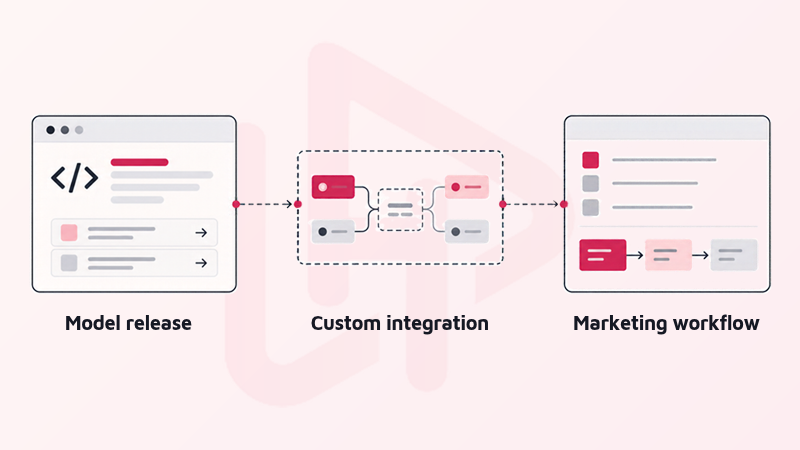
The scope matters for advertisers. A model release can affect the software an agency develops, but it should not be presented as a Google Ads product update without evidence of a corresponding advertising integration. Claims about better campaign results require evaluation in the relevant account and workflow.
Google’s August roundup also covered Gemini Omni 1.1 Flash and Gemini 3.5 Transcribe. These were separate announcements. Combining them into a single Flash advertising system would obscure which product supplies each capability.
For a media-buying team, the useful distinction is between three layers: the underlying model, the integration connecting that model to business data, and the workflow used by employees. An improvement at the first layer does not configure the other two. The agency still needs to choose the information supplied to the assistant, define the permitted tools,s and decide how a reviewer accepts or rejects the result.
This distinction also keeps the release in its proper editorial context. Readers looking for the announcement need to understand what changed, when it was announced, and which claims came from Google. Readers deciding whether to build an integration need a separate assessment of their own requirements. H2T treats the examples below as an evaluation framework, rather than evidence that the announced model has already delivered those outcomes for advertisers.
2. Coding, Agent Capabilities and Launch Pricing
2.1. Coding and agent execution
Google reported more reliable instruction following, planning, ng and tool use. For an agency evaluating internal software, these claims provide testable questions: does the model complete the assigned task correctly, recover from errors, and produce outputs reviewers can verify?
2.2. Introductory pricing and its limits
At launch, Google announced $0.75 per million input tokens and $3.75 per million output tokens, with introductory pricing scheduled through December 31, 2026. Its August roundup described the offer as half the original 3.6 Flash token price. These figures describe the launch offer, not a guarantee of equivalent savings across an agency’s operations.
| Release item | Potential relevance for agencies | What still needs verification |
|---|---|---|
| Coding improvements | Assistance with internal tooling | Correctness, maintenance effort and human review time |
| Agent execution improvements | More complex tool-assisted tasks | Permissions, error handling and safe stopping conditions |
| Introductory token pricing | A different model-cost assumption | Actual token usage, retries and infrastructure costs |
| Subsequent model replacement | A reason to review existing dependencies | The model actually serving requests and its current terms |
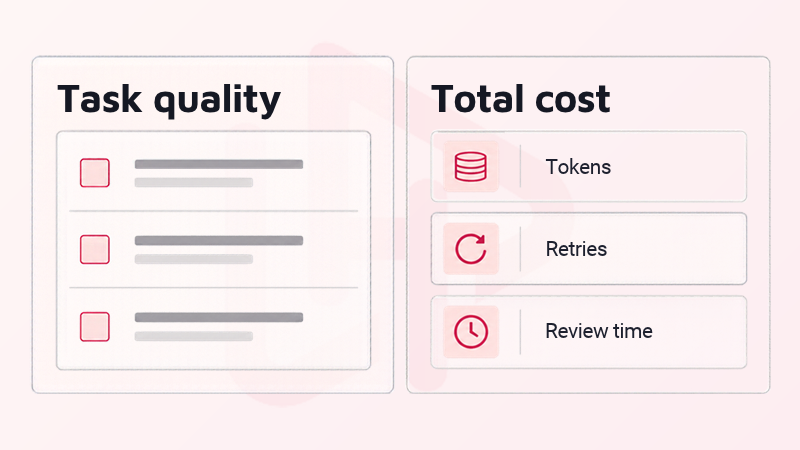
H2T recommends comparing cost per successfully completed task rather than token price alone. A cheaper request can still be an expensive workflow if it creates additional retries, debugging, or manual corrections. The evaluation should include those costs explicitly.
A practical cost comparison should use the same task sample and acceptance standard for every candidate workflow. Count requests that fail, outputs that need rewriting,g and time spent checking the result. If one approach completes more requests but produces fewer usable answers, its apparent speed advantage may disappear during review. Record those differences before concluding operational savings.
For example, an internal reporting assistant might generate a plausible explanation from incomplete account data. The request has been completed technically, but the business task remains unfinished until an analyst verifies the missing context. H2T would count the analyst’s correction time as part of the workflow, not as an unrelated expense. This is an illustrative evaluation scenario, not a reported benchmark or a claim about a specific model’s failure rate.
3. What the Gemini 3.7 Flash Release Means for Media Buyers
The following are potential applications identified by H2T Media Group, rather than native Google Ads features announced with the model.
3.1. Supporting analysts and technical teams
One candidate is a read-only assistant that reviews an exported feed-error report and drafts an explanation for a specialist. Another is assistance with internal scripts, where an engineer checks the code before deployment. Both can be evaluated without initially allowing the model to alter a live campaign.
A useful pilot should ask whether the assistant reduces review time while preserving accuracy. Teams should record missed issues, unsupported recommendations, ns and corrections, rather than judging success from the fluency of the output.
3.2. Keeping analysis separate from execution
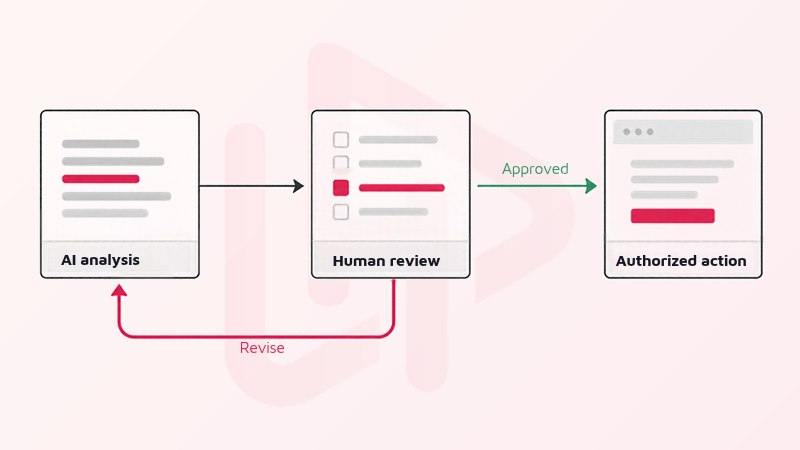
Explaining a feed issue is different from changing a product record. Suggesting a campaign adjustment is different from applying it. H2T recommends defining the approval boundary before testing either workflow, including who can authorize changes and how errors will be reversed.
For the same reason, this release does not establish a five-minute offline conversion pipeline, a guaranteed reduction in CPA or an end to creative fatigue. Those outcomes would need separate implementation evidence and measurement.
For a feed-review pilot, an accepted answer might identify the affected field, point to the supplied evidence, and explain what a specialist should investigate next. It should also state when the export does not contain enough information to diagnose the issue. A fluent answer that invents an account setting should fail review, even if its recommendation sounds plausible. This gives the team a concrete basis for judging assistance rather than presentation quality.
For code assistance, reviewers can separate the proposed change from the permission to execute it. The engineer should inspect the change, check how it handles missing inputs,s and confirm that it does not modify unrelated records. If the workflow later gains write access, the approval step should identify the exact action and affected scope. Keep a record of what was proposed, what was approved, and what actually ran so an unexpected result can be investigated.
4. Model Availability and Adoption Checks
For teams revisiting the announcement now, the first check is whether the model is actually serving their requests. Google’s current documentation identifies 3.8 Flash as the replacement, so any fresh evaluation should use current documentation and record the tested model.
H2T’s recommended review covers four questions: What task is being tested? What data and permissions does it require? What constitutes an acceptable result? Who approves deployment? Documenting these answers makes the evaluation repeatable and helps distinguish a promising demonstration from an operational tool.
Start with a bounded sample and compare the result with a human-reviewed baseline. Review quality, exception handling, time saved, and total cost together. Expand access only when the evidence supports the next step. A detailed implementation guide belongs in a separate knowledge article; the purpose here is to identify what the release changes about the evaluation.
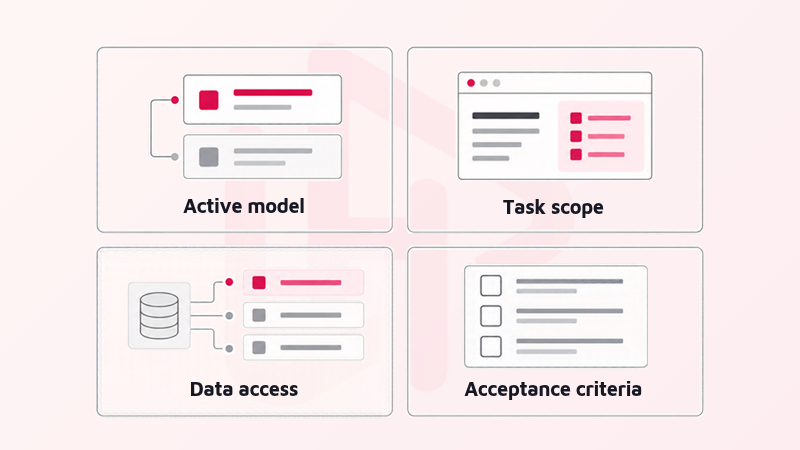
Model availability is also a dependency-management question. A historical release name in an article, a configured model identifier,r and the model currently serving a request are not interchangeable. When a provider routes an older identifier to a replacement, a previous evaluation should not automatically be presented as a test of the replacement. Record the current documentation, request configuration, and evaluation date alongside the observed results.
H2T recommends ending an initial review with an explicit decision: continue testing, revise the task boundary, or stop the pilot. Continue only when outputs meet the agreed acceptance criteria and reviewers can explain the remaining limitations. Revise the boundary when the task is too broad or requires unavailable data. Stop when the workflow cannot be evaluated reliably. These are proposed management decisions for an agency pilot, not prerequisites announced by Google or promises of improved advertising performance.
5. Frequently Asked Questions
Google announced it on August 13, 2026. This article preserves that release context and adds a separate update on its current status.
The cited launch announcement concerned the model. Agency applications discussed here are possible custom workflows, not evidence of a built-in campaign-management integration.
No. Token charges are one component of a software workflow. They do not establish lower media spend, better ROAS or a specific monthly operating cost.
The current documentation says it is deprecated and no longer selectable in Google AI Studio. API requests to its model ID are automatically routed to Gemini 3.8 Flash. Check the linked documentation before changing an integration.
6. Conclusion
The Gemini 3.7 Flash release offered a reason to reassess AI-assisted technical work. For H2T Media Group, the practical lesson is to connect each model claim to a defined task and measurable acceptance criteria. Preserve the distinction between a product announcement, an agency’s proposed application, and an outcome demonstrated in production.
Explore more analysis in our Google Ads category and Insights hub. Join the discussion on H2T Media Group on Facebook and follow H2T Media Group on LinkedIn for professional perspectives.

bichthao
H2T Media Group decodes every meaningful platform update for advertisers and affiliate partners across APAC, EU and North America — always with a practical "H2T take" you can act on.
More about H2T →