


TikTok Q5 marketing is the practice of planning campaigns for the post-Christmas period, when shoppers move beyond gift buying and advertisers reassess media costs, creative, and conversion quality. This guide explains what TikTok’s 2026 research actually supports, how Apps, Gaming and Commerce teams can respond, and which metrics should determine budget decisions. Explore the practical framework from H2T Media Group below.
 Key Takeaways
Q5 shifts shopping intent from gifting to self-purchase. In a 2023 TikTok survey, 75% reported spending the same or more time shopping during Q5.
Essential facts about TikTok Q5 marketing
- The 75% figure measures shopping time, not sales or ROAS.
- CPMs eased after November in TikTok’s Oct 2025–Jan 2026 data; future rates are not guaranteed.
- Apps, Gaming and Commerce need different conversion and value signals.
1. What is Q5 on TikTok?
Q5, sometimes called the invisible quarter, is an informal marketing label for the weeks after the major holiday gifting rush and into the beginning of the new year. It isn’t an official fifth financial quarter, and its operational dates depend on the market, category, and promotional calendar. For advertisers, its significance is a shift in why people buy, not just the date on the calendar.
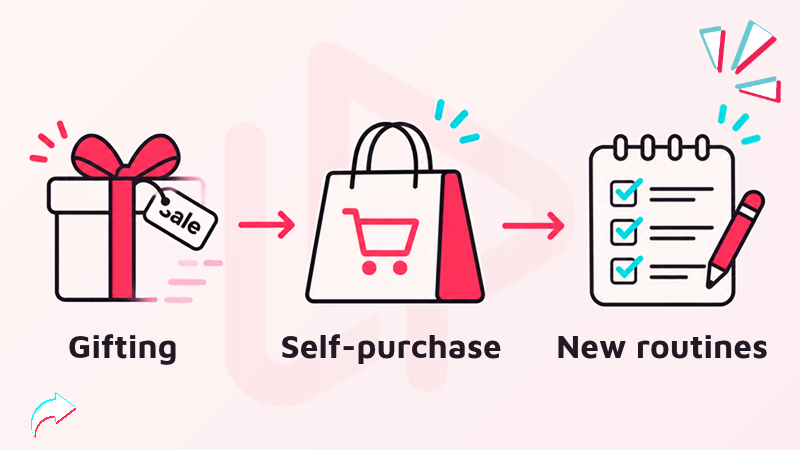
In Q4, a creative brief may emphasize gift guides, deadlines, and limited-time offers. In Q5, an equally relevant offer may address a personal purchase, a new routine, an unredeemed gift card or a service the consumer postponed. A fitness app, a mobile game, and a household retailer should not be expected to show identical Q5 demand patterns. The goal is to identify the relevant post-holiday job-to-be-done before moving spend.
This article specifically covers post-Christmas TikTok acquisition and measurement. For Black Friday, 12.12 and the wider holiday build-up, see H2T Media Group’s TikTok holiday marketing 2026 guide.
2. What the 2026 TikTok Q5 evidence says, and does not say
TikTok’s November 2, 2026 article brings together research from different periods. Its reported 75% share of surveyed TikTok users spending the same amount of time or more shopping in Q5 comes from a September 2023 user survey. The 63% figure about shopping for oneself is drawn separately from National Retail Federation consumer research in December 2025. Neither figure is a measured conversion rate for the upcoming Q5 window.
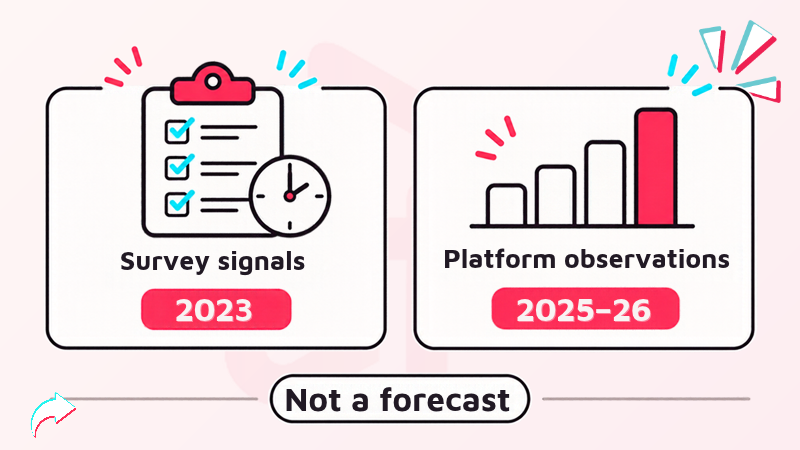
TikTok also describes global CPMs easing from a November peak across its October 2025–January 2026 observations. In the same historical period, content around “New Year, New Me” rose 169% within 30 days after Christmas. That last number refers to content volume, not revenue, purchases, or ROAS. The sensible inference is that both media conditions and creative themes may change; the unsupported inference would be that every advertiser will buy cheaper conversions in 2026–2027.
A lower CPM can coexist with a worse cost per acquisition if click quality, landing-page conversion or audience intent deteriorates. Treat the source as a planning hypothesis, then check whether that hypothesis holds in your own account. TikTok’s published findings are contextual evidence, not promised results.
Read more:
TikTok for Business — Why Q5 is a golden opportunity for advertisers
3. How Q5 strategy differs for Apps, Gaming and Commerce
The same seasonal calendar can contain three different business models. An app advertiser may need an activated subscriber; a game publisher may need a player who generates seven-day value; a shop needs an order that remains worthwhile after fulfillment and incentives. The product configuration and measurement system must reflect those distinctions before automated delivery can be evaluated fairly.
3.1. Apps: optimize beyond the install
In TikTok’s September 2023 app-related survey, 85% of respondents said they spent the same amount of time or more on TikTok in Q5, while 73% expected to spend the same amount of time or more downloading apps. These are self-reported activity measures, not evidence that app installs or paid subscriptions rose by those percentages.
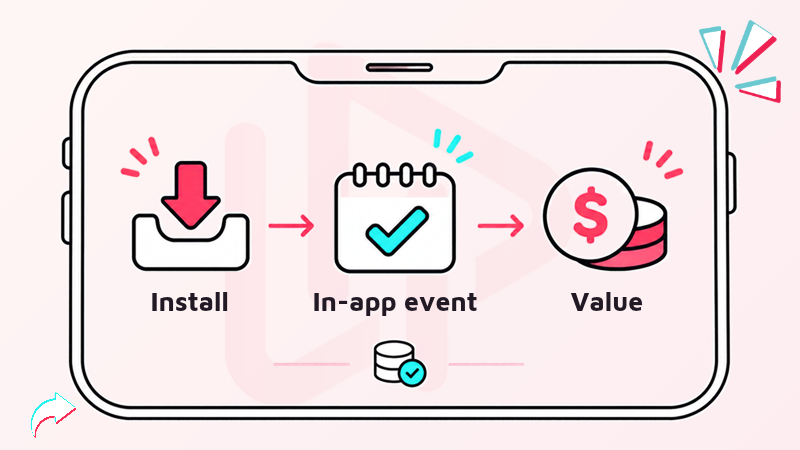
App Install may suit a newly launched product that needs acquisition volume; App Event Optimization (AEO) is relevant when a meaningful in-app action is tracked consistently; and Value-Based Optimization (VBO) may be appropriate when usable value signals and eligibility support it. These options are not an automatic upgrade ladder. Check event frequency, attribution, SDK or MMP configuration, geography, and supported optimization settings first.
Review CPI alongside activation, trial-to-paid conversion, retention, and revenue per acquired user, as applicable. Creative should show a real post-holiday use case, rather than forcing every app into a generic resolution theme. For additional context on automation choices, see H2T Media Group’s TikTok Smart Plus 2026 analysis.
3.2. Gaming: use player value, not installs alone
TikTok’s article cites $7.1 billion in worldwide mobile game spending during January 2026, sourced to Sensor Tower. That is market-level spending, not revenue generated by TikTok ads. The same article describes D7 value-oriented optimization for gaming, including strategies targeting seven-day return or cumulative value, subject to operating-system and integration conditions.
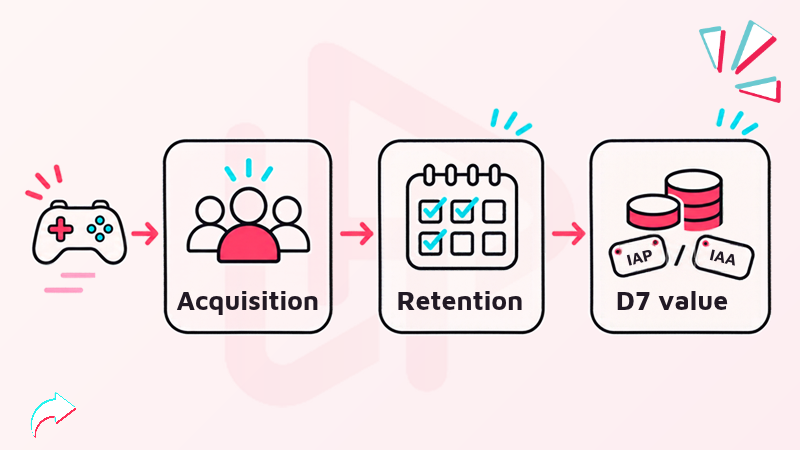
For the gaming team, a Q5 experiment should distinguish cheap installs from retained players and monetizing cohorts. Track D1 and D7 retention, payer conversion, in-app purchases (IAP), in-app advertising (IAA) revenue, and cumulative D7 value where instrumented. Evaluate changes by country, game genre, and campaign objective; do not compare a broad-reach installation campaign directly with a value-optimized one and attribute the difference to seasonality.
Before choosing D7 tROAS or Highest Value, verify the current TikTok SDK, iOS/Android, and account eligibility rules. Product access and bidding availability can change; a feature mentioned in a marketing article is not proof that an individual account can use it.
3.3. Commerce: shift from gifting to profitable self-purchase
For commerce, the creative shift may involve replenishment, personal upgrades, practical essentials, and gift-card redemption. Smart+ Catalog Ads can connect catalog products to relevant demand, while GMV Max is aimed at TikTok Shop sales optimization where supported. These solutions should be evaluated against a working catalog, accurate product availability, and dependable order data, not assumed to create intent on their own.
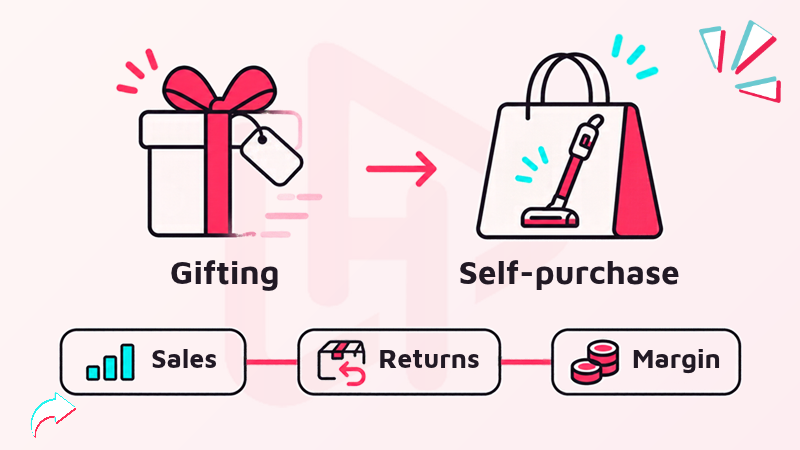
A strong measurement plan separates gross merchandise value, returns, discount cost, affiliate commissions, and contribution margin. TikTok describes GMV Max Pro capabilities that incorporate operating costs, with affiliate-cost optimization and smart coupons identified as US beta features in the November 2026 article. They must not be presented as generally available worldwide.
Use a clear offer that makes sense after Christmas, and verify stock, shipping promise, and margin before raising spend. H2T Media Group’s TikTok Shop GMV Max analysis provides additional context on commerce automation beyond the Q5 window.
| Business model | Conversion signal to prioritize | Quality check before scaling |
|---|---|---|
| Apps | Install, qualified in-app event or value | Activation, retention, paid conversion |
| Gaming | D7 revenue/value where supported | D7 retention, payer rate, IAP/IAA value |
| Commerce | Product purchase or eligible Shop sales goal | Net sales, returns, margin, fulfillment |
4. A practical Q5 operating plan for performance teams
An effective Q5 plan connects creative, measurement, and budget decisions in a controlled sequence. The following framework is H2T Media Group’s operating recommendation, not a TikTok-defined campaign product or proven performance formula. Its purpose is to make seasonal observations testable without confusing auction effects with creative or conversion changes.
4.1. Rewrite the brief around buyer intent
Start by reviewing the actual customer problem. Replace a blanket “last-minute gifts” message with a testable proposition such as setting up a new routine, buying for oneself, restocking an essential, or spending a gift card. Keep the underlying product claim accurate and the target customer relevant. For every variant, record the hypothesis, featured product, CTA, and intended conversion event.
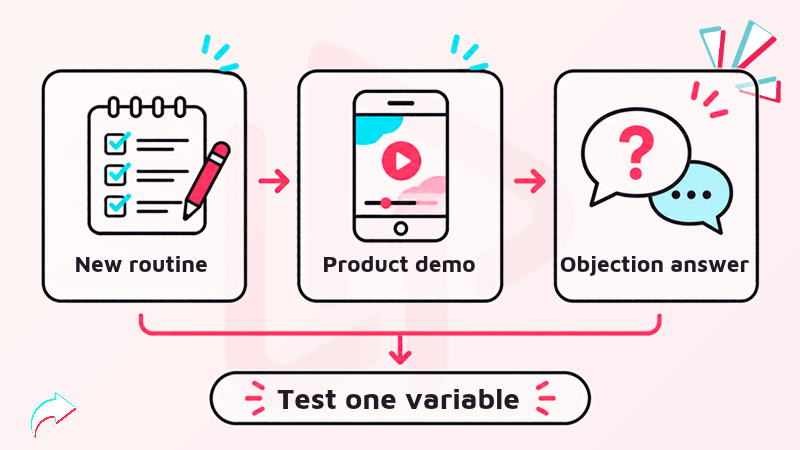
Develop a compact creative matrix rather than dozens of disconnected videos: one post-holiday use case, one evergreen product demonstration, and one evidence-led objection handler. Different treatments can be compared only if the offer, audience and measurement context are sufficiently similar.
4.2. Audit auction and conversion baselines before moving budget
Build a baseline for each market, objective, placement, audience cohort and attribution window. Compare a suitable Q4 reference period with the Q5 test period, flagging promotions, stock constraints, targeting changes, and tracking disruptions. Monitor CPM, CTR, CVR, and CPA/CPI together. CPM alone tells you the cost of impressions, not whether the customers are commercially useful.
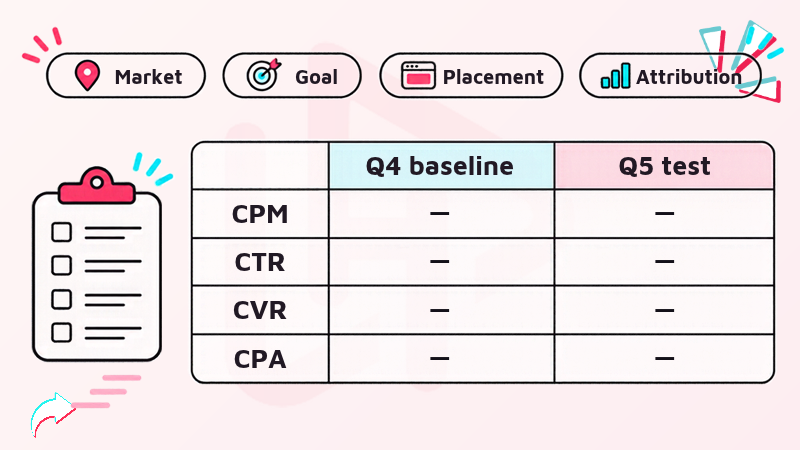
Move spend in small, reviewable increments. If CPM falls while CPA worsens, investigate creative-to-offer mismatch and conversion friction; if CPA improves but retention or net value weakens, check audience quality and the optimization event. Do not call a Q5 test successful based solely on one cheaper auction metric.
4.3. Make a decision using downstream value
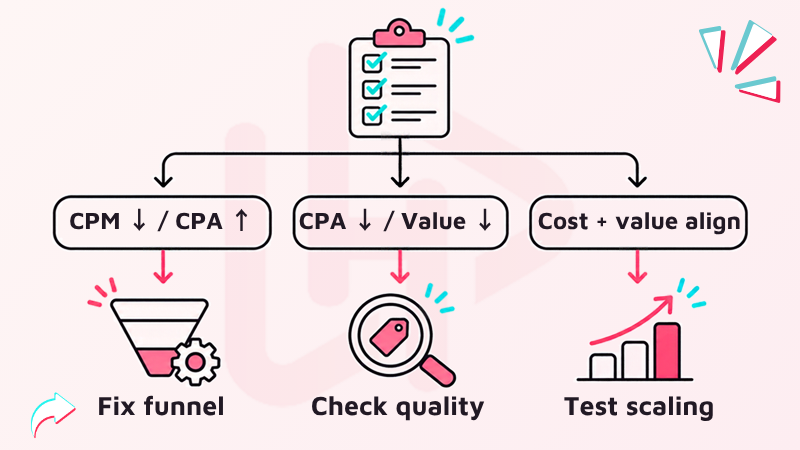
Define the scaling rule before the campaign starts: for example, require an acceptable acquisition cost and stable downstream value against a comparable baseline. The correct threshold depends on the business’s own contribution economics; there is no universal Q5 CPA or ROAS target supported by TikTok’s source.
| Observed account pattern | Diagnostic question | Recommended response |
|---|---|---|
| CPM down, CPA up | Has traffic or conversion quality declined? | Repair creative, offer or conversion path before scaling |
| CPA down, retention/value down | Is the optimization event rewarding low-quality users? | Audit cohort quality and value signals |
| CPA acceptable, downstream value stable | Are cohorts and tracking comparable? | Test incremental scaling with monitoring |
A weekly review should distinguish observed data, creative hypotheses, platform feature availability, and business decisions. Save those distinctions for Q1: useful learning is more durable than a short-lived CPM dip.
5. Risks, eligibility and the limits of seasonal research
The most common Q5 error is turning directional findings into guaranteed results. TikTok’s 75%, 85% and 73% survey indicators date to 2023. Its global CPM pattern and the 169% content figure describe October 2025–January 2026 observations. The 63% self-shopping figure belongs to a separate December 2025 consumer study. The samples, definitions, and periods differ, so they should not be combined into a single synthetic success rate.
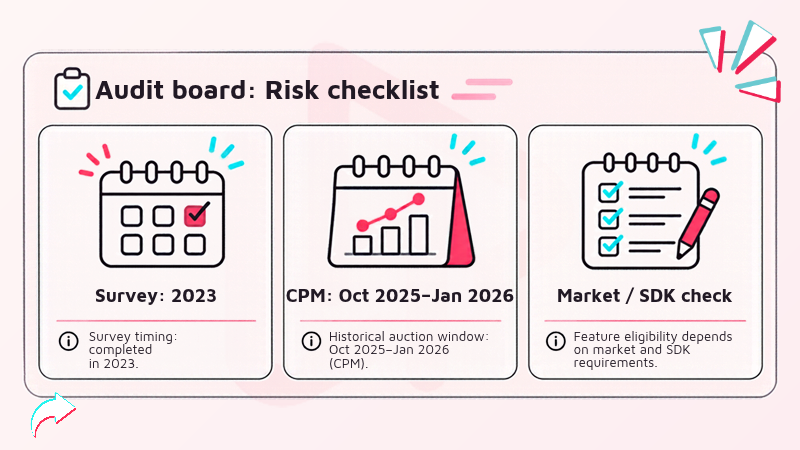
Automated products also have implementation boundaries: app event quality, SDK/MMP configuration, operating system, campaign objective, region, and staged rollout. For gaming D7 value optimization or US-beta commerce capabilities, verify live eligibility in Ads Manager and TikTok documentation before authorizing spend. Finally, source versioning matters: localized TikTok Q5 pages can differ in their feature descriptions; use the November 2026 version relevant to your market, not an older cached copy.
6. Frequently asked questions
Q5 is an informal post-holiday marketing period, not an official fiscal quarter. Define the campaign window against local shopping behavior, holidays and your business calendar.
No. TikTok reports a historical global pattern after November’s peak; individual auctions and future markets can behave differently. Measure CPM alongside CPA and customer value.
No single objective fits every app. Use App Install, AEO or VBO according to business goals, reliable event data and current account eligibility.
No. The November 2026 TikTok article describes selected GMV Max Pro capabilities as US beta. Confirm market access and feature rollout before planning around them.
No. First test a relevant post-holiday offer and comparable cohorts; scale only when acquisition cost and downstream economics justify it.
Conclusion
TikTok Q5 marketing should be treated as a disciplined growth experiment: identify a real change in purchase intent, choose the right event for Apps, Gaming or Commerce, and assess media cost alongside conversion quality and value. The 2026 TikTok research provides useful hypotheses, but your account data must determine the investment decision.
For more platform analysis, explore the H2T Media Group TikTok category. Join the conversation with H2T Media Group on Facebook and follow H2T Media Group on LinkedIn for ongoing performance marketing perspectives.

bichthao
H2T Media Group decodes every meaningful platform update for advertisers and affiliate partners across APAC, EU and North America — always with a practical "H2T take" you can act on.
More about H2T →