


Bing Web Mode is a reported search-interface test, not a confirmed global launch. Alongside Microsoft’s newly documented AI-answer controls, it highlights an important SEO question: will people choose your website when they want to inspect the original source? Read H2T Media Group’s analysis of what changed, what click research can (and cannot) tell us, and how to build content worth visiting.

Key Takeaways
Microsoft now offers ways to hide AI-generated answers in Bing, while Bing Web Mode has been observed only in limited interface testing.
Essential facts about Bing Web Mode and AI search choice
- On November 11, 2026, Microsoft documented the Bing AI Search Choice extension (preview) and the
-aiquery operator to hide AI-generated answers. - Limited testing observed the Bing Web Mode tab; Microsoft has not confirmed a global rollout.
- Google introduced its Web filter in May 2024 to show text-based website links.
- Pew Research Center observed traditional-result clicks on 8% of Google search visits with an AI summary versus 15% without one; these figures do not predict Bing Web Mode traffic.
1. What changed in Bing search in November 2026
Two separate developments have been grouped into one “Bing turns off AI” story. They should not be treated as the same product release. Microsoft has documented controls for suppressing visible AI answers; independent observers have separately reported an experimental Web Mode tab.
1.1. Microsoft documented two AI-answer controls
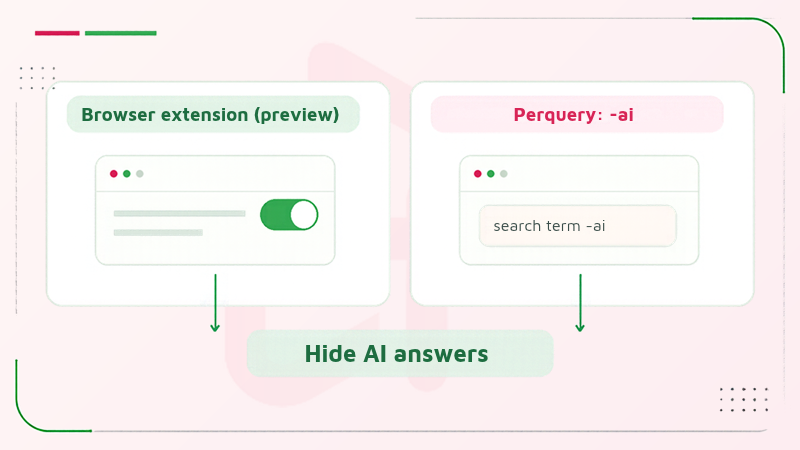
On November 11, 2026, the Bing Search Blog described the Microsoft Bing AI Search Choice extension (preview) for Chrome and Edge. Its toggle lets users choose whether to display AI-generated answers across Bing searches. Installing the extension also sets Bing as the default search engine, a relevant condition for any implementation advice.
Microsoft also described the -ai query operator. Adding it to an individual Bing search requests results without AI-generated answers, without installing an extension. A persistent browser-level toggle and a per-query operator serve different workflows. Neither claim means every machine-learning component of search ranking has been disabled.
Read more:
Microsoft Bing Search Blog — AI answer choice announcement
1.2. Web Mode is a reported interface test
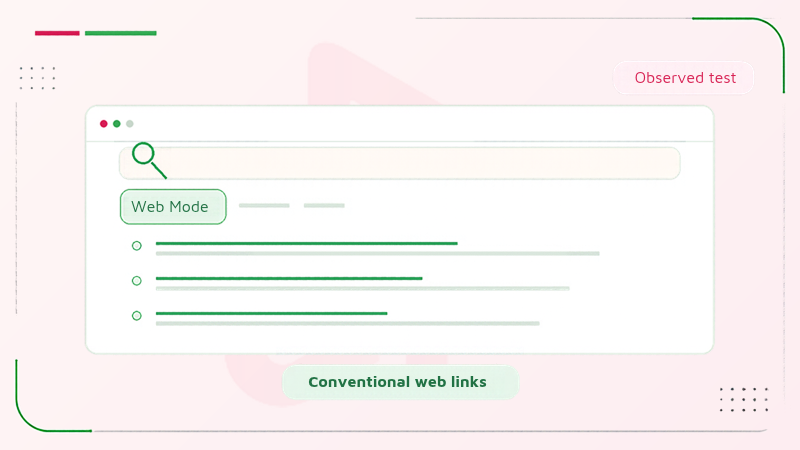
On November 14–16, industry publications documented a “Web Mode” tab in some Bing browser experiences. Search Engine Roundtable described the tab as showing conventional web page results while removing other result features, including Copilot answers, in the tested interface. That is an observation of selected browsers, not a Microsoft announcement of universal availability.
The market coverage, eligibility, usage share, and final product behavior remain unconfirmed. SEO teams should report “tested” or “observed”, not “launched worldwide”, and distinguish this tab from the separate extension and -ai operator.
Read more:
Search Engine Roundtable — Bing tests Web Mode
Search Engine Watch — Web Mode interface observation
2. How Bing Web Mode compares with Google’s Web filter
Google introduced a Web filter on May 14, 2024, to display text-based website links. Bing’s November 2026 developments are therefore part of a longer shift toward giving searchers more control over how results are presented, rather than the first appearance of a link-focused option.
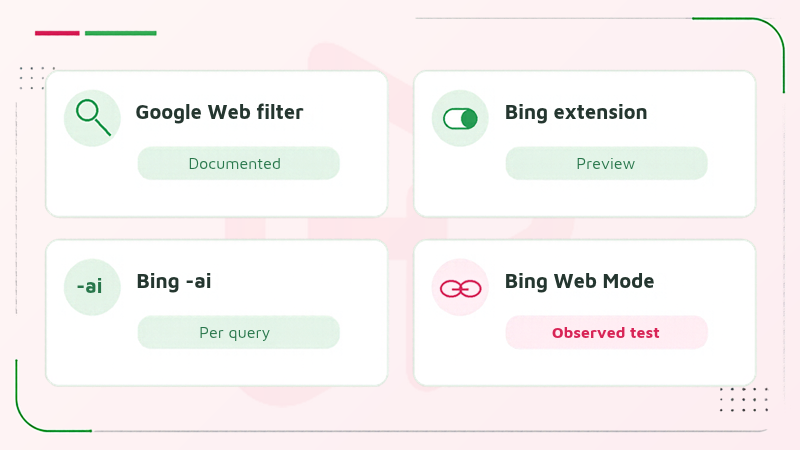
The controls differ in scope and availability. The comparison below separates product documentation from observed tests; it should not be read as evidence that their underlying ranking systems or user adoption are equivalent.
| Search experience | What the user can choose | Evidence and availability |
|---|---|---|
| Google Web filter | A result view focused on text-based website links | Introduced May 2024; publicly documented |
| Bing AI Search Choice extension | Show or hide AI-generated answers via a browser toggle | Microsoft-documented preview; Chrome/Edge; sets Bing as default |
| Bing -ai operator | Suppress AI-generated answers for one query | Microsoft-documented query option |
| Bing Web Mode tab | Reported view focused on conventional website results | Observed in some browsers; broad rollout unconfirmed |
Google’s October 2026 updates to AI Mode and AI Overviews also experimented with highlighting useful source links inside AI experiences. That adds nuance: modern search can surface original websites through AI-assisted answers and through dedicated web-result views. The useful question is which route best serves a particular user task.
Read more:
Search Engine Land — Google Web filter launch, May 2024
Google Blog — More ways to explore the web, October 2026
3. What research says about AI summaries and clicks
The existence of a Web tab does not reveal how many people use it or whether their behavior will change. Independent browsing research offers a more defensible starting point, but its scope must stay attached to every metric.
3.1. The 8% versus 15% finding
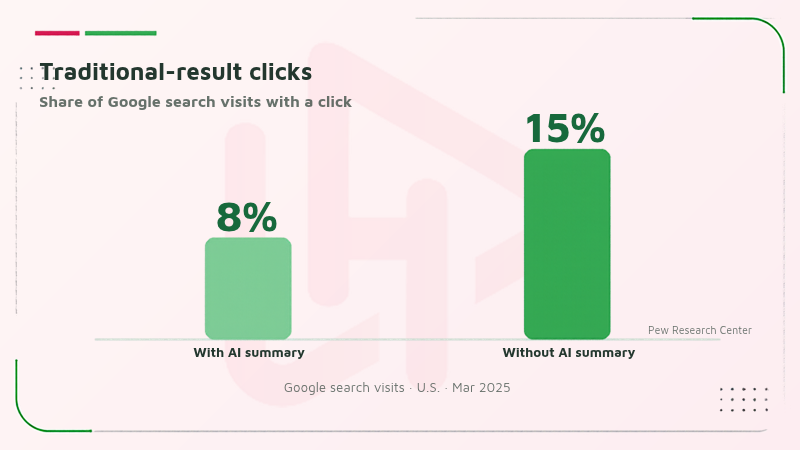
In a Pew Research Center analysis published July 22, 2025, researchers examined Google searches made by 900 U.S. adults who shared tracked browsing data from March 2025. Users clicked a traditional search-result link in 8% of visits with an AI summary, compared with 15% of visits without an AI summary. Clicks on links inside the summaries occurred in 1% of visits that displayed one.
These denominators are visits to Google search pages, not unique users, impressions for your site, or measured conversion rates. The study also reconstructed result pages in April 2025, a methodological limit when interpreting what individuals may have seen in March.
Read more:
Pew Research Center — Google search clicks and AI summaries
3.2. What this finding does not establish
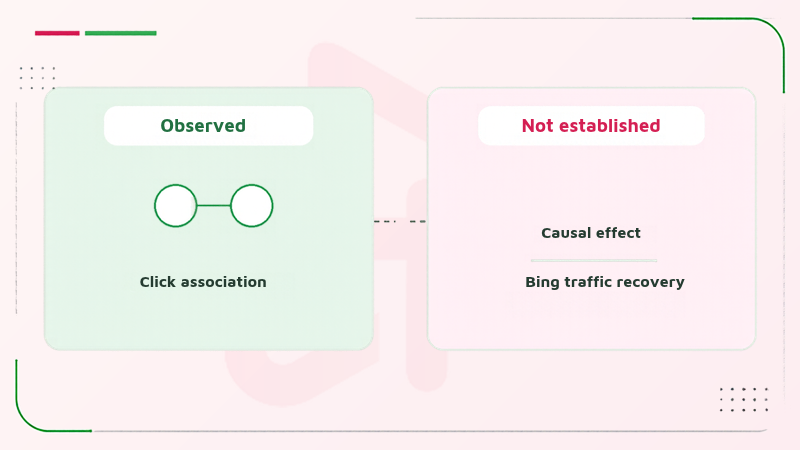
Pew’s analysis is observational. It does not isolate the causal effect of AI summaries from search intent, query wording, topic, or other differences between visits. It is not a Bing Web Mode study and cannot estimate how many clicks a website would regain if searchers selected a web-only view.
Similarly, the presence of a control is not proof of broad “AI fatigue”. Some people may prefer a concise answer; others may need primary documents, detailed comparisons, or source verification. Those are plausible use cases, not a measured migration away from AI Search.
4. Build a source-first SEO content strategy
H2T Media Group recommends treating the website as the destination that makes deeper examination useful, not merely a page that repeats a generated summary. The following three-part framework is editorial guidance, not a Bing or Google ranking formula and not a promise of AI citations or traffic recovery.
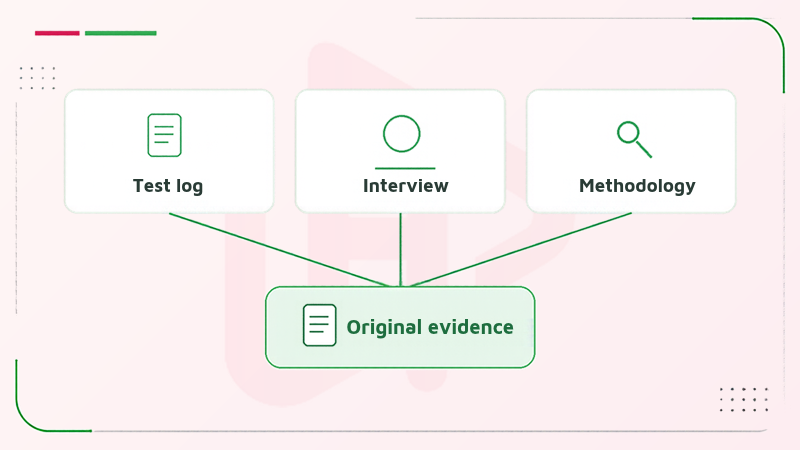
4.1. Publish original evidence
Give readers something they cannot get from an interchangeable overview: documented tests, first-hand interviews, benchmark methodology, real product constraints, or a clearly attributed interpretation of primary documents. Label the collection date, geography, and limitations of any statistics. For news content, separate “announced”, “tested”, “observed”, and “inferred”.
An original asset does not need to be enormous. A carefully tested workflow, version-by-version comparison or annotated data table can be more useful than a long article assembled from existing summaries. Avoid scaled pages that paraphrase the same search results without adding information.
4.2. Make authority verifiable
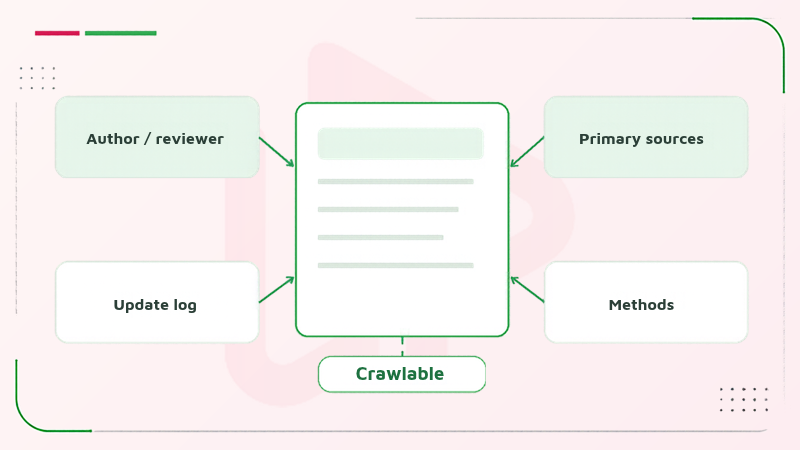
Show the responsible author or reviewer, primary references, material updates, scope of expertise, and a clear correction process where appropriate. Avoid unsupported claims that schema markup or a particular prompt technique guarantees AI inclusion. Google’s people-first guidance emphasizes original information, accurate sourcing, and demonstrable usefulness.
Technical readiness still matters: confirm that important pages can be crawled and indexed, their canonical signals are coherent, internal navigation is understandable, and the content matches what the title promises. H2T Media Group’s AI-first SEO architecture analysis provides complementary technical context, while this article addresses search-interface choice.
Read more:
Google Search Central — Helpful, reliable, people-first content
Google Search Central — Generative AI search guidance
4.3. Give the click a job to do
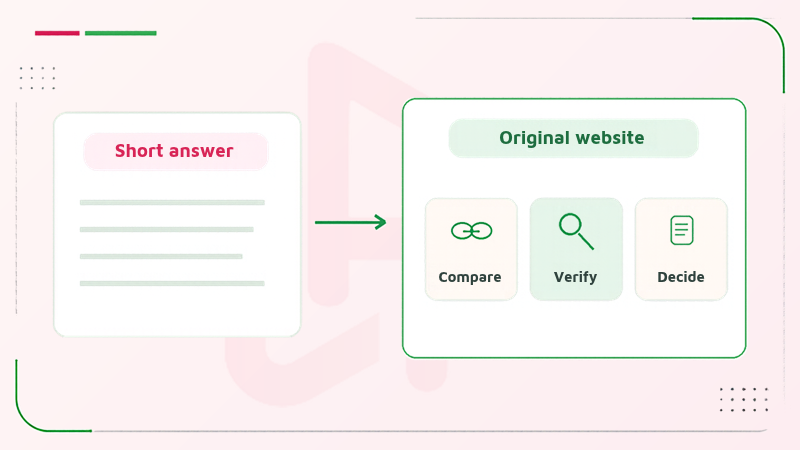
A visitor who selects a website link may want to compare options, download evidence, check specifications, or make a decision. Support that task with useful navigation, short explanatory sections, descriptive tables, accessible media, and clear next steps. Do not hide the only relevant answer behind unnecessary interaction.
Build for both quick scanning and deeper reading. A clear summary at the top can coexist with detailed examples, definitions, and caveats below it. The objective is not to become impossible for AI to summarize; it is to make the original page valuable even after a summary has been read.
5. Measure visibility, visits, and business outcomes separately
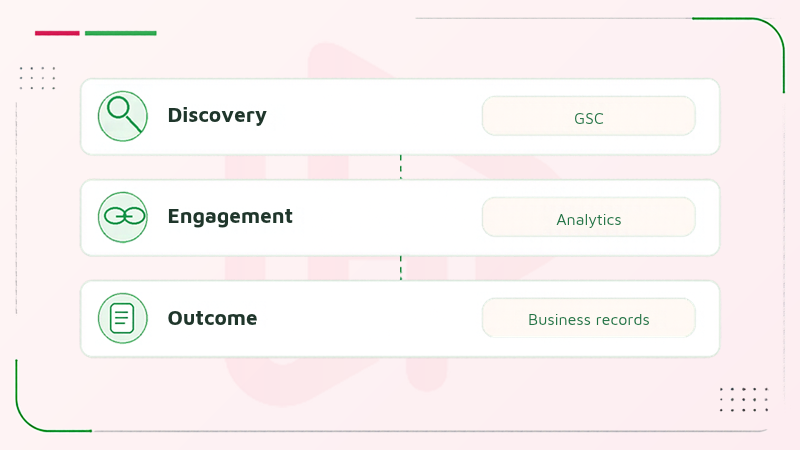
Do not treat a ranking, an AI mention, an organic session, and a qualified inquiry as equivalent measures of success. Report the search journey in layers: discovery (eligible queries, impressions and observable AI citations), engagement (landing-page visits and meaningful interactions), and outcome (qualified inquiries, completed tasks or sales where attribution is supportable).
Segment by query intent, landing-page type, and search surface whenever measurement supports it. Note where tools cannot separate AI-assisted appearances from conventional results, and avoid claiming individual clicks can be perfectly tied to every AI citation. H2T Media Group’s Google AI Mode SEO impact analysis covers these measurement boundaries in greater detail.
A page can gain attention without generating a visit, or receive fewer visits with stronger downstream outcomes. Assess attribution against observed data rather than guessing from an interface change. Use Search Console, analytics, and first-party business records as complementary (not interchangeable) sources.
6. Run a 30-day source-first website audit
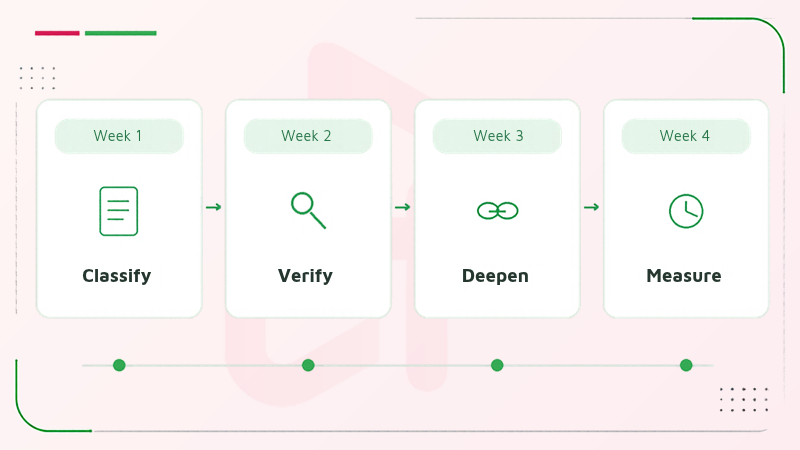
A practical response to Bing Web Mode does not require replacing the content roadmap. Select priority pages with meaningful search demand and business relevance, then use a four-week sequence to improve what users encounter after choosing a link.
- Week 1 — Classify: Map page intent, existing rankings, search appearance, and business value. Check whether a proposed new page duplicates an established URL.
- Week 2 — Verify: Inspect primary sources, author information, claims, dates, crawlability, and indexability. Remove or qualify unsupported assertions.
- Week 3 — Deepen: Add original evidence, useful comparisons, tested examples, and clearer answers. Improve structure and contextual internal links.
- Week 4 — Measure: Establish a baseline for search visibility, engaged visits, and qualified outcomes; record what remains unobservable before drawing conclusions.
Maintain separate notes for verified facts, editorial hypotheses, and experiments. A stronger page may support traditional results and AI-assisted discovery, but neither outcome is guaranteed by the audit itself.
7. Frequently asked questions
There was no confirmed global rollout in the sources reviewed on November 18, 2026. Industry observers reported the tab in some browsers. Availability may differ by account, market and device.
No such broad claim is supported. Microsoft documents -ai as a way to suppress AI-generated answers for a query, not as a switch that removes every machine-learning component from search ranking.
They share an emphasis on website links, but their availability, placement and implementation should not be assumed identical. Google launched its Web filter in May 2024; Bing Web Mode was still a reported test.
There is no verified evidence establishing that outcome. Changes in click behavior depend on adoption, intent, ranking, result layout and other factors. Evaluate actual landing-page visits and business outcomes.
No. Keep core SEO fundamentals and helpful original content strong while monitoring AI-assisted discovery. Searchers may use both summaries and original websites depending on the task.
Conclusion
Bing Web Mode is a reminder that search is not one fixed interface. Microsoft’s documented AI-answer controls, a limited Web Mode test, and Google’s earlier Web filter all point to more ways to navigate between synthesized answers and original sources. The defensible SEO response is to publish verifiable, useful content and measure what happens after the click, not to predict a return to ten blue links.
Explore more SEO and AI Search from H2T Media Group’s Insights hub, or continue the discussion through H2T Media Group on Facebook and H2T Media Group on LinkedIn.

bichthao
H2T Media Group decodes every meaningful platform update for advertisers and affiliate partners across APAC, EU and North America — always with a practical "H2T take" you can act on.
More about H2T →