


The YouTube holiday playbook 2026 offers a way to plan seasonal video around how shoppers discover, evaluate, and act – not just the final checkout. A useful campaign connects each buyer question to the right content, shopping destination, and measurement signal. In this guide, H2T Media Group turns verified Google guidance and a clearly labeled editorial framework into a practical holiday plan.

Key Takeaways
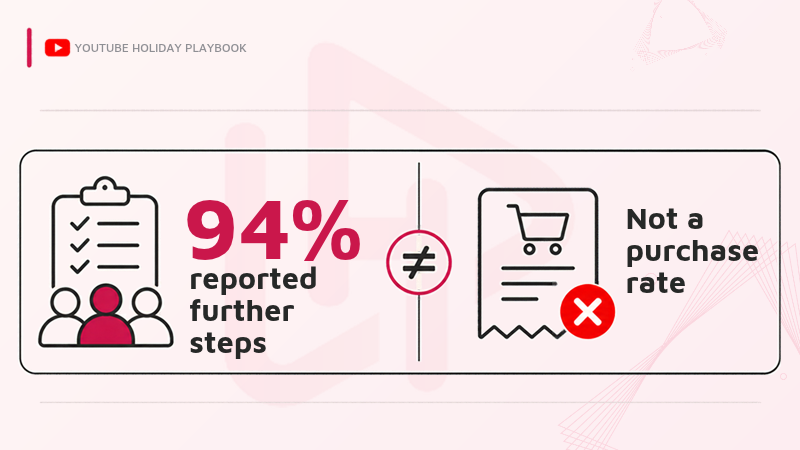
Google reports that 94% of surveyed U.S. holiday shoppers who used YouTube for shopping said they took further steps toward a purchase after watching a related video. This is self-reported behavior, not a purchase rate or measured conversion lift.
Essential facts about the YouTube holiday playbook 2026
- The Google-commissioned Ipsos U.S. online survey ran from October 2025 to January 2026; the relevant subgroup included 4,391 respondents.
- The 94% figure refers to additional shopping steps reported after viewing relevant videos, not verified completed purchases or incremental sales.
- Plan, Shop and Experience form the editorial content-planning framework used by H2T Media Group in this article, not a mandatory Google Ads campaign structure.
- Product feeds and Checkout Links depend on current account, product and market eligibility, as well as accurate product information.
- Attention and engagement metrics should not be presented as conversion outcomes; incremental impact requires a credible test.
1. What the 2026 holiday shopping signal actually means
Google reports that 94% of surveyed U.S. holiday shoppers who used YouTube for shopping said they took further steps toward a purchase after watching a related video. The cited Google-commissioned Ipsos online survey ran from October 2025 to January 2026 among adults aged 18 or older; the relevant subgroup comprised 4,391 respondents who had undertaken holiday shopping activities in the previous two days and watched shopping videos on YouTube.
“Further steps” is the critical wording. This is a self-reported behavior signal, not a 94% purchase rate, an ad-attributed conversion rate, a causal test or a promised revenue lift. It supports a reason to investigate video’s contribution across the buying journey; it cannot tell an individual advertiser how many orders its campaign will generate. That distinction should be visible in both executive reporting and consumer-facing case studies.
For media planning, the more useful question is whether the video answers a real buying need and makes the next action clear. A gift guide and a product demonstration can both contribute to demand, but they require different creative briefs and different standards of success.
Read more:
Google — July 2026 Demand Gen Drop
2. Map content to Plan, Shop and Experience
For holiday planning, H2T Media Group uses an editorial map of three moments: Plan, Shop and Experience. This is a way to match content and measurement to changing shopper questions before, during, and after peak promotions, not a mandatory Google Ads account or campaign structure. The specific content and KPI choices below are H2T Media Group recommendations.
2.1. Plan: earn a place on the shortlist
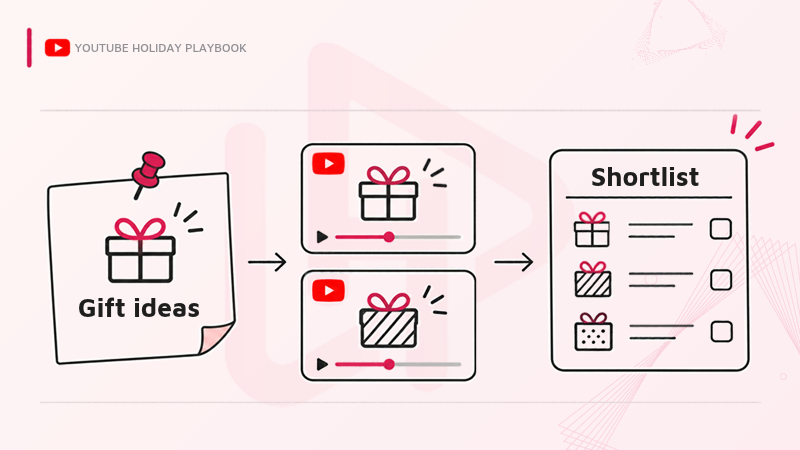
Before a shopper compares offers, they may still be deciding whom to buy for and what type of gift fits the occasion. Use creator-led ideas, category explainers and gift guides to make the product understandable without forcing a premature sales pitch. Match formats to intent: a short video may introduce a concept, while a longer demonstration answers deeper questions.
Define success through relevant reach, engaged views and evidence of qualified interest. These are leading indicators; none proves revenue. Brief creators around accurate product facts and genuine audience questions, with space for their own style. If the team plans to promote a creator video later, document consent and usage rights separately from the original collaboration.
2.2. Shop: make product validation useful
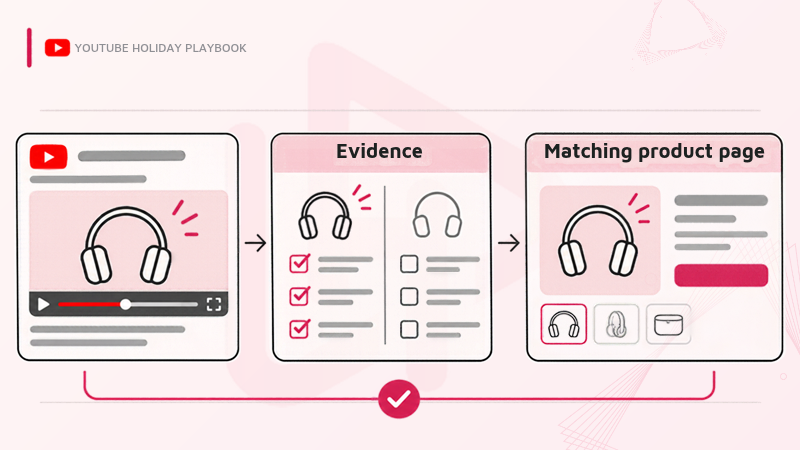
As shoppers compare alternatives, the job shifts from inspiration to evidence. Demonstrations, honest comparisons, fit or compatibility checks and clearly explained offers can remove uncertainty. A useful review should show what the product does, whom it suits and what trade-offs matter, rather than repeating the price or promotion.
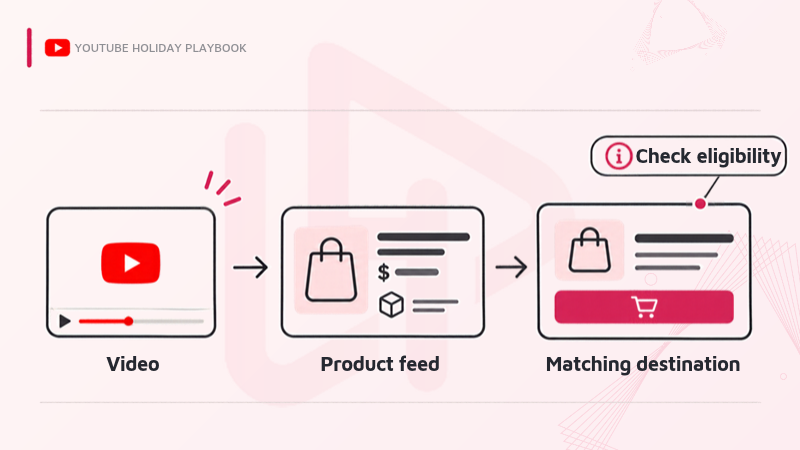
Keep the next step consistent with the video. A viewer considering a particular model should reach a matching product detail page, not a generic homepage. Track product views, qualified landing sessions and verified purchases separately, so an engagement gain is not automatically reported as a sales gain. Test whether the page actually answers the question raised by the creative.
2.3. Experience: support the post-holiday moment
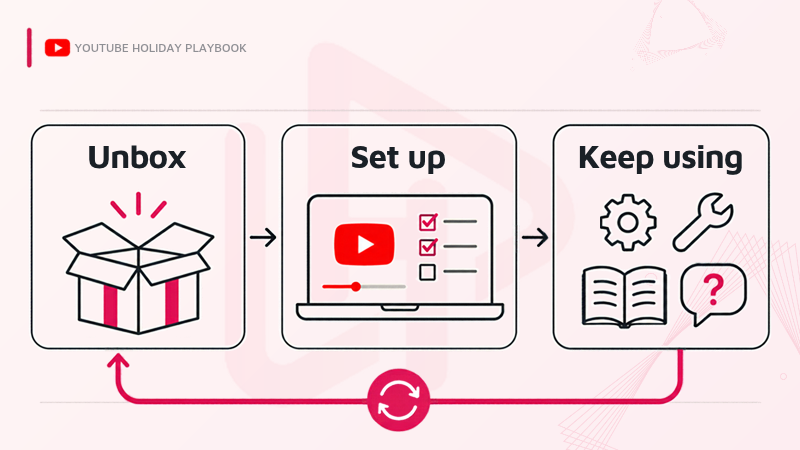
Holiday activity does not necessarily stop when gifts are opened. Setup tutorials, usage tips, accessory explainers, gift-card ideas, and relevant end-of-season offers can serve people who already own or have received a product. This is an opportunity for useful service content as well as future demand, not permission to remarket indiscriminately.
Segment responsibly: distinguish existing customers from new prospects, apply appropriate exclusions, respect consent and avoid making unsupported assumptions about a viewer’s purchase. Measure returning engagement and any validated follow-on orders; do not interpret repeat video views as incremental sales by themselves.
| Seasonal stage | Shopper question | Useful video job | Illustrative measurement signal |
|---|---|---|---|
| Plan | What should I buy? | Gift ideas, category explainers | Qualified reach; engaged views |
| Shop | Which option fits? | Reviews, demos, comparisons | Product views; qualified visits; purchases |
| Experience | What can I do next? | Setup, use, accessories | Returning engagement; validated follow-on orders |
3. Connect video proof to a relevant commercial next step
A holiday content calendar becomes a stronger operating plan when the audience, creative and destination are designed together. The goal is not to add a purchase button to every video; it is to make the transition appropriate for what the viewer is ready to do. Two handoffs deserve particular attention: creator authorization and accurate product information.
3.1. Brief creators for the buyer question, then verify rights
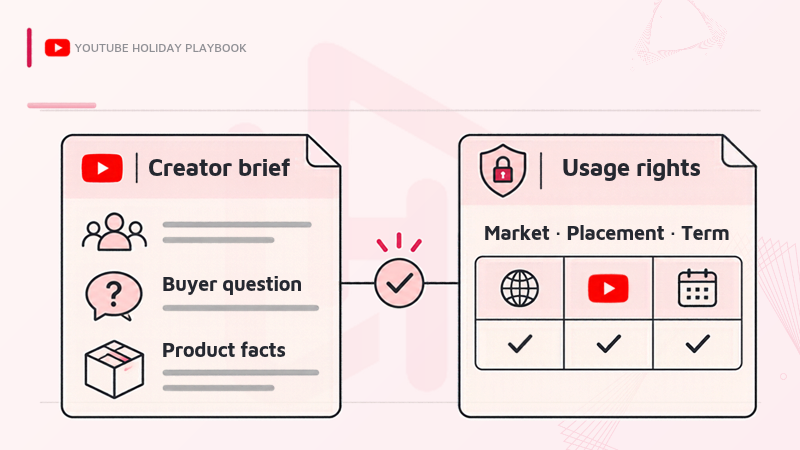
Use a creative brief that states the product truth, intended audience, principal question, non-negotiable disclosures and desired next step. Avoid scripting away the creator’s voice. A comparison creator may excel at evidence for the Shop stage; a lifestyle creator may be more valuable for early discovery. Select by role and fit rather than subscriber count alone.
Operationally, obtain the applicable permissions before paid amplification: the right to use the exact video, approved placements, markets, duration, and any additional licensing conditions. Platform access and contractual rights are not interchangeable. For a fuller workflow, see H2T Media Group’s YouTube Build and Boost playbook.
3.2. Align product feeds, checkout paths and eligibility
Google’s July 2026 Demand Gen announcement discusses Merchant Center product feeds and Checkout Links, which can direct eligible viewers toward a merchant’s cart or checkout page. Its official product-feed documentation also describes how video and catalog information can work together across supported placements. These capabilities require accurate product data, relevant landing pages and checks on account, market and product eligibility.
Read more:
Google Ads Help — Use a product feed in Demand Gen
Before launch, confirm that the product title, image, price, stock status and destination represent the item shown in the video. Review the mobile checkout, shipping information and event tracking. A shorter path is only helpful if it remains correct and usable. Google identified nine additional Checkout Links markets in its July announcement; this is not evidence that every account or country can activate the feature. Treat availability as a deployment check, not a universal promise.
Read more:
Accelerate with Google — Checkout Links
4. Measure the journey without turning attention into sales
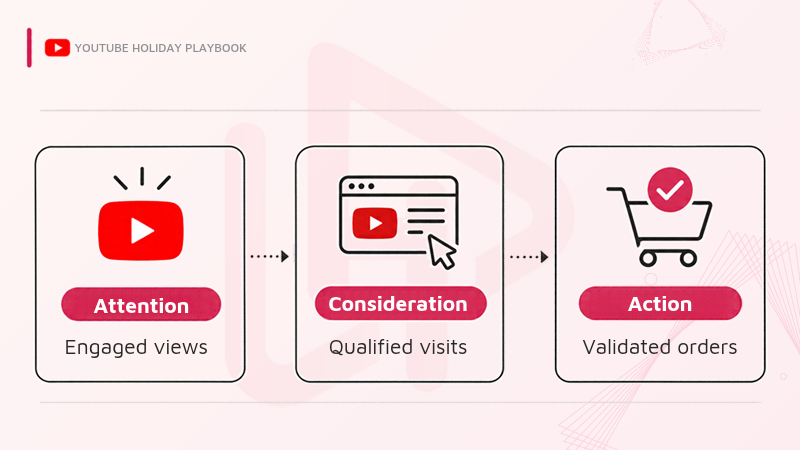
Video can assist decisions well before a last-click event, but an early-stage signal must not be reported as a final business outcome. H2T Media Group recommends separating reach, consideration and validated commercial results, then testing how they relate. This gives creative and media teams a shared diagnostic language without claiming that a view caused a purchase.
4.1. Assign a metric to the decision it can support
A reach or engaged-view metric helps assess delivery and relevance. Qualified product-page sessions show that more people explored an offer. A purchase event supports transaction reporting only when tracking, deduplication, and order validation are sound. No single layer can replace the others, and platform-attributed outcomes should be clearly identified as such.
| Measurement layer | Example signals | What it can indicate | What it cannot prove alone |
|---|---|---|---|
| Attention | Relevant reach, engaged views | Exposure and content engagement | Orders or revenue impact |
| Consideration | Product views, qualified sessions | Progress toward evaluation | Completed purchases |
| Commercial outcome | Validated purchases, revenue | Recorded business activity | Incremental causal lift without a test |
For campaign setup details, H2T Media Group’s YouTube Performance Four analysis covers a separate Demand Gen optimization framework. This article instead addresses when a seasonal signal is meaningful and how to avoid overclaiming its effect.
4.2. Test incrementality only when the design is credible
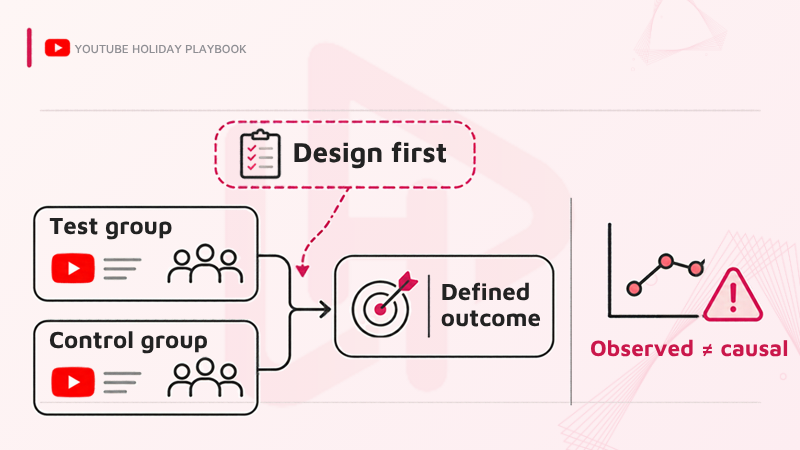
Where budget, sample size and platform capabilities permit, consider a controlled lift study or another appropriate experimental design. Define the outcome, comparison group, timing and decision threshold before reading results. A post-launch increase in orders, by itself, cannot isolate video from promotion, pricing, search demand or concurrent campaigns.
If a causal test is not feasible, be precise about the limitation. Use directional evidence such as audience quality, tagged visits and verified orders to improve operations, but describe those findings as observational. Assess campaign economics using real margins and fulfillment capacity rather than equating more video engagement with higher profit.
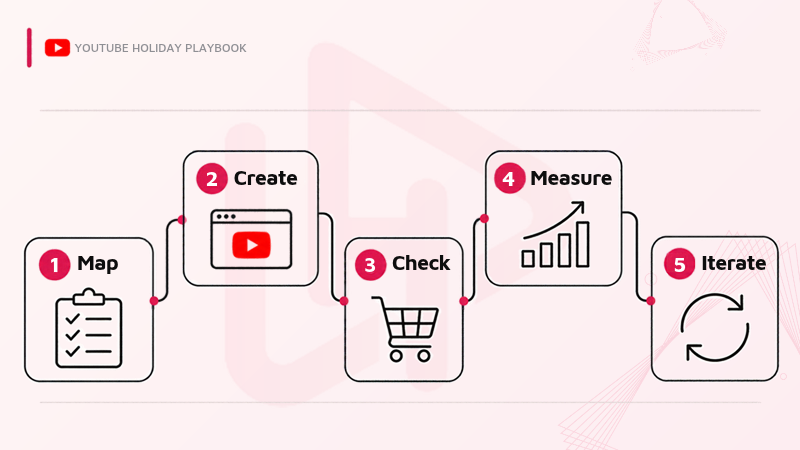
5. A five-step holiday execution checklist
Translate the Plan–Shop–Experience map into a weekly operating rhythm. Begin with one product category or audience segment rather than rebuilding every campaign simultaneously. Assign owners for creative, feeds, landing pages, analytics and approval so problems have a clear resolution path.
- Map questions by moment. Write down what customers need to know in Plan, Shop and Experience, then identify content gaps.
- Build the creative matrix. Produce distinct inspiration, proof and support assets, including formats that fit each placement.
- Audit the commerce handoff. Match video claims to the correct product, page, price, availability and authorized creative rights.
- Define stage-appropriate KPIs. Establish reporting definitions for engaged views, qualified visits and validated orders before launch.
- Review and iterate. Compare questions answered, landing-page friction and downstream outcomes; update creative without rewriting the evidence.
This checklist is an H2T Media Group editorial recommendation, not a mandatory Google Ads configuration. For teams managing several channels, document dependencies with other seasonal campaigns and record changes to offers or stock that can affect interpretation.
6. Evidence and eligibility boundaries for 2026
Three constraints should accompany any holiday marketing presentation. First, the 94% finding describes reported further actions among a specific U.S. survey group; it does not measure advertiser conversion lift. Second, product feeds and Checkout Links depend on documented setup requirements and available markets. Third, a content framework is a planning tool, not proof that every stage or creative type will outperform alternatives.
Avoid presenting unspecified creator-ad uplift figures as universal YouTube promises. The verified Google Demand Gen announcement and product-feed documentation support the limited product claims discussed here, while the content strategy and measurement recommendations are H2T Media Group’s editorial interpretation. Any new headline result needs its own study definition, market, period, and comparison method.
7. Frequently asked questions
These answers distinguish the published Google evidence from editorial implementation advice. Account-specific decisions still require checking the current help documentation, campaign configuration, and reporting setup before launch.
No. Google describes further steps toward a purchase reported by surveyed U.S. holiday shoppers who used YouTube for shopping. It does not identify a 94% completed-purchase rate or establish causal ad lift.
No. Here it is used as a seasonal editorial map for shopper questions and content tasks. Campaign types, targeting and bidding still depend on objectives, eligibility and account conditions.
Do not assume so. Google announced expansion to specific markets, while implementation also depends on eligible Merchant Center data, campaign setup and current product requirements. Verify availability for the advertiser’s target market.
Start with the decision the campaign is intended to influence. Use attention metrics for awareness, qualified visits for consideration and validated orders or revenue for commercial performance. Use a suitable experiment when you need an incremental-impact claim.
Conclusion
The YouTube holiday playbook 2026 is most useful when video content, shopping destinations and measurement are aligned with what customers need next. Use the survey as context (not a forecast) and treat Plan, Shop and Experience as testable content hypotheses. Explore more platform analysis through the YouTube Build and Boost guide and the wider Insights hub. For ongoing discussion, follow H2T Media Group on Facebook and H2T Media Group on LinkedIn.

bichthao
H2T Media Group decodes every meaningful platform update for advertisers and affiliate partners across APAC, EU and North America — always with a practical "H2T take" you can act on.
More about H2T →