

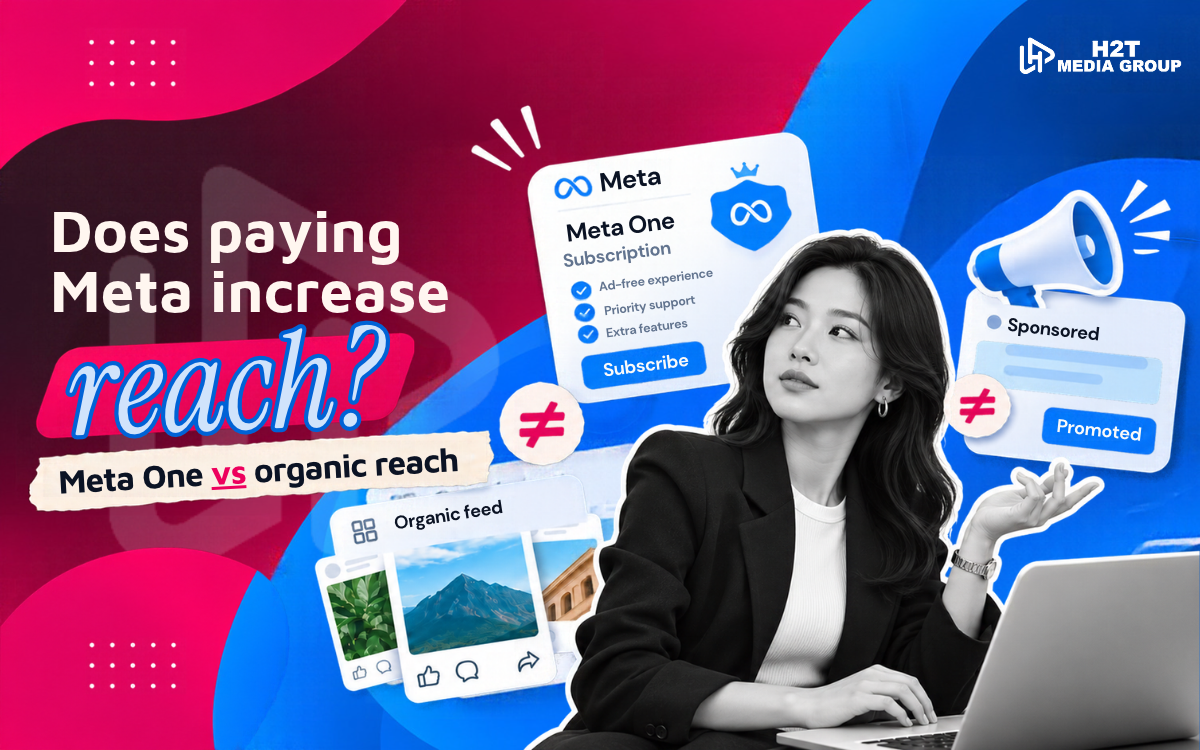
Does paying Meta increase reach? The public evidence reviewed does not establish a direct organic-ranking advantage from a Meta One or Meta Verified subscription. Meta One can unlock publishing, identity, analytics, and AI tools, while boosting paid distribution through a separate advertising process. H2T Media Group explains the distinction, the limited Facebook link-posting test, and a measurement framework for deciding where budget belongs.

Key Takeaways
No reviewed public Meta documentation establishes a direct organic-ranking boost simply for buying Meta One or Meta Verified. Subscription features, organic discovery, and paid advertising delivery are separate mechanisms.
Essential facts about paying for Meta and organic reach
- Meta One plans start at US$14.99 per month in announced offers; benefits, availability, and pricing vary by plan, account, and region.
- Meta One Advanced includes eligible publishing and analytics features; Meta has not established that those features provide preferential organic ranking.
- Sprout Social reports a link-posting restriction test affecting certain Facebook Pages, not a universal reduction in organic reach.
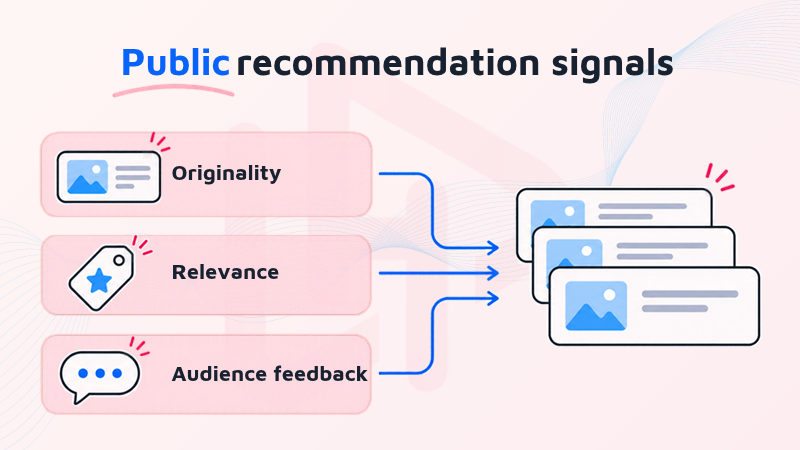
- Meta identifies user interests, feedback, and original content as relevant to content recommendations, without disclosing every ranking factor.
- Boosting and Meta Ads buy paid delivery. Their reach must not be attributed to a Meta One subscription as organic growth.
1. What does paying Meta actually buy?
The phrase ‘paying Meta’ covers products with different purposes. A business may subscribe to a professional tool bundle, pay to distribute an ad, or use Facebook and Instagram without either purchase. Before assessing reach, identify which transaction occurred and what the buyer was promised.
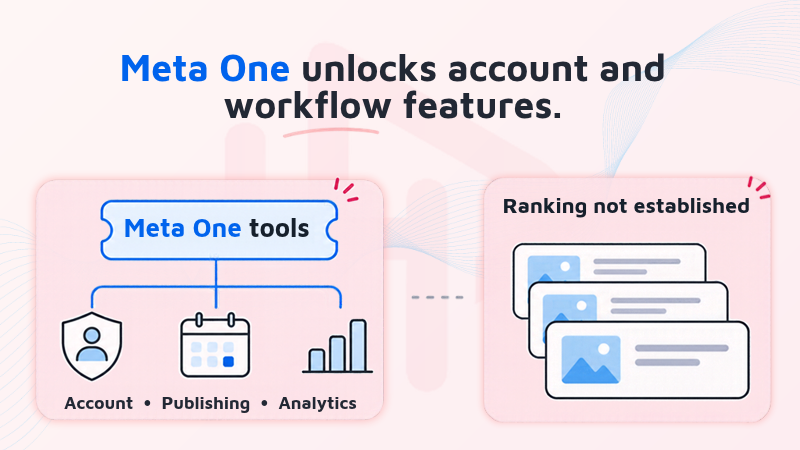
1.1. Meta One unlocks account and workflow features
Meta announced Meta One on 15 September 2026. Creator and business bundle prices begin at US$14.99/month for Essential, US$49.99 for Advanced, US$149 for Expert, and US$499 for Max. These are starting prices, not universal quotes: Meta says plans, benefits, and availability depend on region, app, and account. The rollout combines existing and new tools rather than guaranteeing a reach outcome.
Essential includes identity and protection benefits subject to verification, alongside more access to Meta Business Agent. Advanced adds capabilities such as story scheduling, links in eligible organic posts and Reels, exportable analytics, and team access. Higher plans expand feature availability and agent capacity. A prominent follow button or invitation could plausibly change user actions, but such a mechanism is not evidence that subscription status directly boosts a post’s ranking score.
Read more:
Meta — Introducing Meta One (15 September 2026)
1.2. Boosting and ad campaigns buy paid distribution
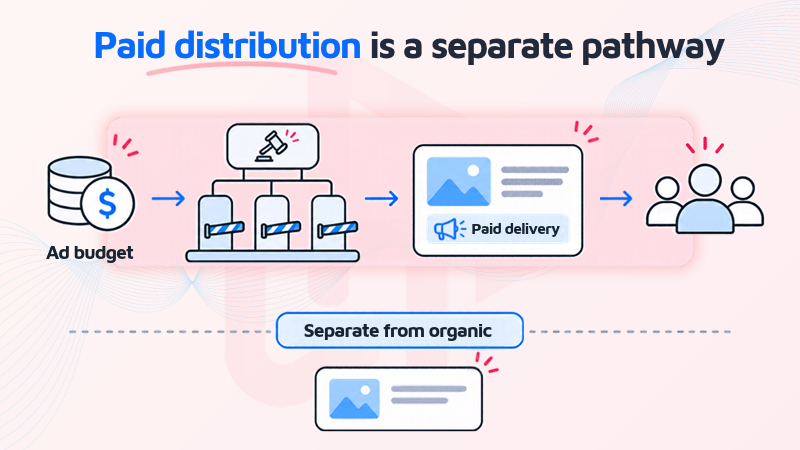
Boosting a post or running a Meta Ads campaign is a media purchase. Delivery occurs under advertising objectives, auction conditions, audience, and creative settings. By contrast, a Meta One subscription is a recurring access cost for a bundle of tools. Ad impressions generated with paid budget should not be reported as an organic lift caused by a subscription.
| Payment/product | What it buys | Best measurement | What it does not establish |
|---|---|---|---|
| Meta One subscription | Tools, account features and eligible publishing capabilities | Usage, time saved, operational value | Direct organic ranking priority |
| Organic publishing | Unpaid content distribution (no media purchase) | Organic unique reach, interactions, follows | Guaranteed impressions or a fixed uplift |
| Boosting / Meta Ads | Purchased advertising delivery | Paid reach, cost, qualified outcomes | A subscription-driven organic lift |
2. Does Meta One affect organic ranking?
The central evidence question is narrower than the marketing rumor. The reviewed announcements explain product features and recommendation principles, but they do not publish a full model specification. That difference determines what an analyst may responsibly conclude and which hypotheses still need measurement.
2.1. What the public documentation establishes
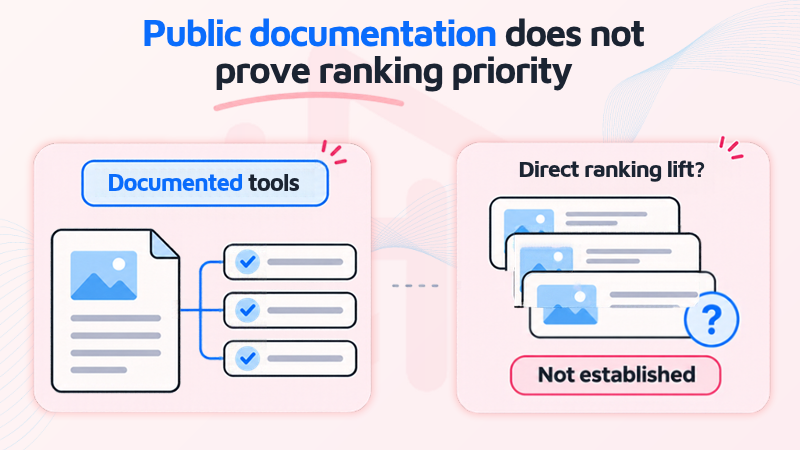
The September Meta One announcement describes professional tools, account presence and AI usage; it does not establish a direct organic-ranking advantage, a fixed reach multiplier or preferential ad-auction priority for subscribers. AdLibrary’s September 2026 analysis likewise separates subscription entitlements from organic distribution. This supports a precise conclusion: a direct ranking benefit is not established by the reviewed public evidence. It does not prove that no undisclosed interaction could ever exist.
A short-term increase after an upgrade is observational evidence, not proof of causation. Publishing frequency, content mix, audience trends, and advertising spend may change at the same time. To claim that billing status caused a change, a team would need a defensible comparison that isolates those other factors.
Read more:
AdLibrary — Does paying Meta increase reach?
2.2. What Meta publicly says shapes recommendations
In October 2026, Meta described Facebook recommendation systems that respond to user interests, engagement and explicit feedback, including natural-language preferences. Its March creator update also said original work is favored in Feed and Reels recommendations, while low-value reposting can be deprioritized. These statements give teams practical optimization areas: relevance, originality, and the audience experience.
Read more:
Meta — Your algorithm, your words (13 October 2026)
None of these announcements reveals every ranking weight. There is no credible basis to invent a formula, promise a percentage improvement, or assume that one format wins in every account. Compare content performance within the same audience and period, and keep paid reach separate from organic reporting.
Read more:
Meta — Rewarding original creators on Facebook (13 March 2026)
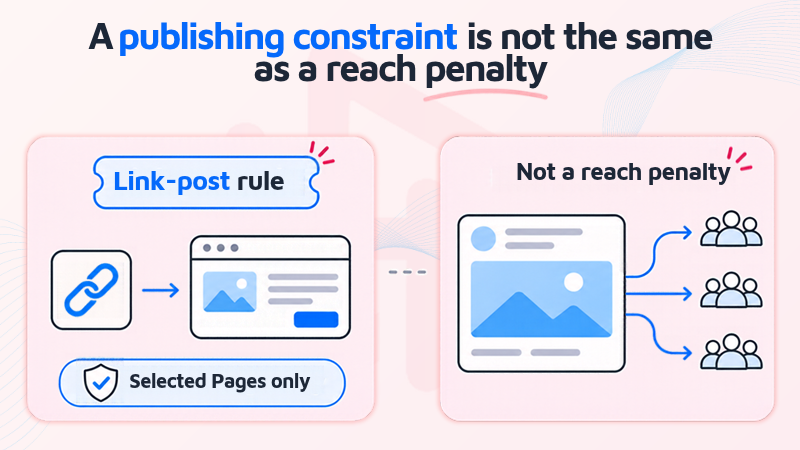
3. Why a Facebook link limit is not a reach penalty
A publishing restriction determines whether a particular asset can be posted; a ranking decision concerns distribution after publication. They occur at different points in the content lifecycle. The distinction is particularly important as Meta One adds link-related publishing features while third-party partners describe an account-specific test.
3.1. What the reported Facebook Page test covers
Sprout Social reports that certain Facebook Pages included in Meta’s test, when not subscribed to Meta One, can include links in up to two organic posts or comments per calendar month. Unused allowances do not roll over. The report says personal profiles and Groups are not part of this test and that some links, including links in advertisements and links to Meta apps, are excluded. This is vendor-reported implementation guidance for tested Pages, not a blanket policy for all Facebook or Instagram accounts.
Meta’s launch materials separately list enhanced link and publishing functionality for Advanced and higher business products. They do not, in the reviewed release, confirm every numeric limit for every tier. For that reason, do not use a single Expert or Max allowance quoted in third-party articles as a universal entitlement across markets. Check the actual in-product terms.
Read more:
Sprout Social — Meta One Facebook link limits and publishing
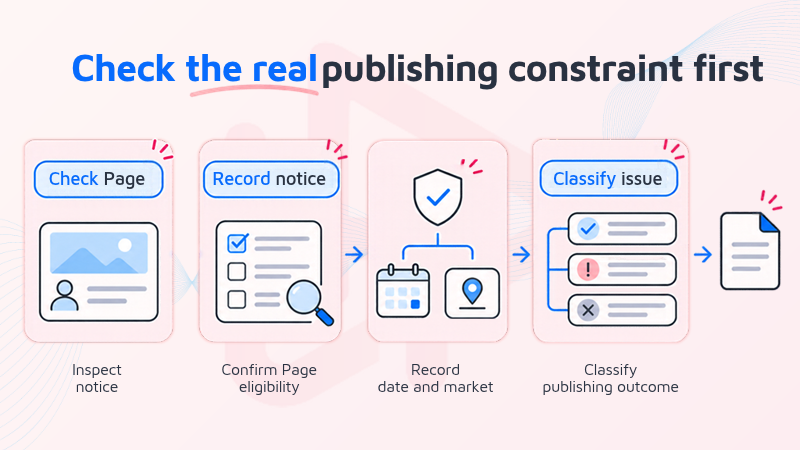
3.2. How to check the real publishing constraint
Before changing plans, open the affected Page in Facebook or Meta Business Suite and inspect any notice about remaining link posts. Test the exact destination format your team normally publishes, without bypassing platform rules. Record the Page, market, date, surface and error or allowance shown. If there is no notice, do not infer that the Page is currently subject to the test.
A post that cannot be submitted because of a link rule has no post-publication reach to analyze. A post that publishes but reaches fewer people requires a different diagnosis: content performance, audience behavior, and distribution context. Sprout says it had not observed the same restriction affecting publishing through its tool at the time of its report, but that observation is subject to change and is not an approved workaround.
4. A three-ledger framework for reach and ROI
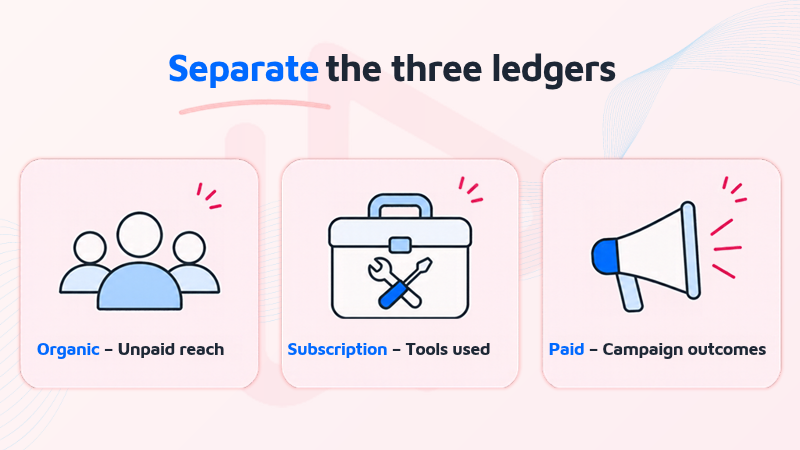
The practical problem is attribution. Organic content, subscription tooling, and paid media can all influence the same customer journey, but their costs and outcomes are not interchangeable. H2T Media Group recommends separate ledgers to avoid assigning the entire result to whichever payment was made most recently.
4.1. Separate organic, subscription and paid metrics
The organic ledger tracks people reached without purchased delivery, along with content engagement and follow actions where the platform makes them available. The subscription ledger measures concrete operational benefits such as time saved, verified access and eligible publishing functions. The paid ledger measures purchased delivery and business outcomes against media spend. None of these figures should be silently merged into a single ‘subscription reach uplift’ claim.
| Ledger | Suggested indicators | Decision question | Interpretation guardrail |
|---|---|---|---|
| Organic | Unpaid unique reach, watch time, quality engagement | Did relevant content reach more people? | Control for format, paid support and timing |
| Subscription | Eligible features used, work hours saved, support capacity | Did the bundle solve a workflow problem? | Do not label the benefit organic ranking |
| Paid media | Media spend, paid reach, qualified actions, CPA | Did purchased distribution meet its objective? | Attribution is not the same as incrementality |
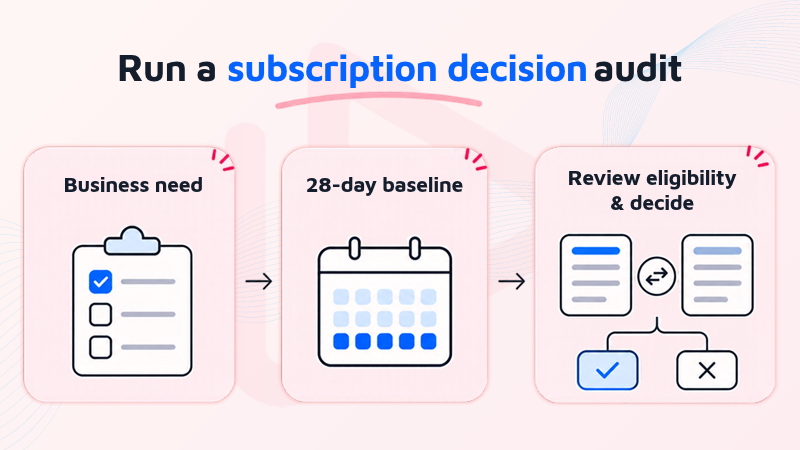
4.2. Run a subscription decision audit
Start with the specific problem rather than a tier name. If the team frequently hits a confirmed link restriction, that is a publishing-capacity issue. If support queues are growing, automation may matter. If customer acquisition is weak, improve creative, conversion tracking, and paid strategy before assuming a badge or subscription is the missing reach lever.
- Capture a 28-day baseline for organic content output, unique reach where available, follower actions, and distribution by format.
- Inventory which Meta One features the account actually qualifies for, their starting and displayed prices, and the operating problem they solve.
- Track any link-limit notices and publish failures separately from performance of successfully published posts.
- Keep boosting and campaign spend in a distinct report with objective, paid reach, qualified actions, and attribution limits.
- Review results with a comparison period and note seasonality, creative changes, paid support and any other confounders.
For a deeper subscription-economics exercise, consult the existing H2T Media Group analysis of Meta One Max ROI and break-even models. For badge-specific conversion hypotheses, see the Meta Verified conversion-rate evaluation. Those questions overlap operationally but are not identical to whether subscription status changes organic ranking.
5. What should marketers prioritize?
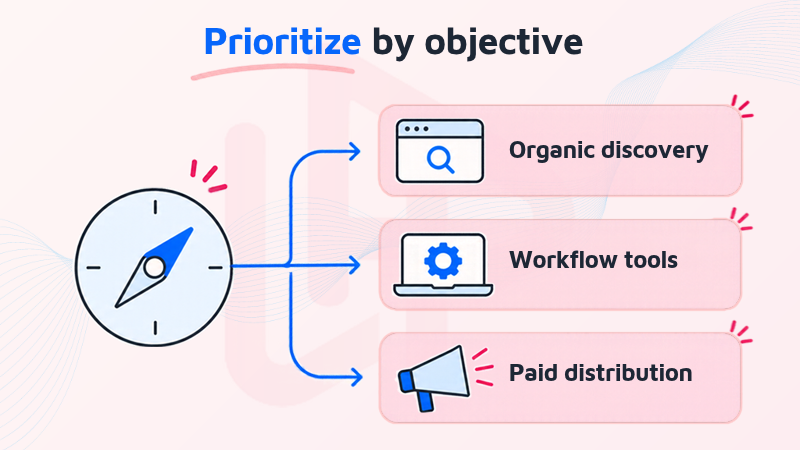
If the objective is organic discovery, invest first in useful, original content and a repeatable editorial testing process. If the bottleneck is account management, security, eligible link publishing, or response time, evaluate the Meta One feature list against that workflow. If reach needs to be guaranteed through purchased inventory, set a paid objective and judge delivery against ad budget, not subscription status.
The distinction is not a verdict that subscriptions are worthless. It is a requirement to match each product with a measurable business problem. Use the pricing and eligibility displayed in your own account and revisit the decision when Meta changes the rollout. As of this 13 November 2026 editorial review, the reviewed public sources do not establish a subscription-based organic-ranking multiplier.
6. Frequently asked questions
The questions below address the most common budget, badge, and publishing-policy confusions. Answers reflect only the reviewed public evidence and do not replace the eligibility terms shown in an individual Meta account.
Buying Meta One has no direct organic-ranking uplift established by the reviewed public sources. Paying to boost a post can increase paid delivery, which is a different metric.
The reviewed Meta Verified and Meta One materials do not document a direct ranking advantage from a verification badge. Any effect through trust or profile visits would need its own evidence.
No universal rule is established here. Sprout Social reports a two-link monthly allowance for certain non-subscribed Pages included in a test; other accounts may see different rules or no notice.
No. Meta One is a subscription bundle for account and workflow features. Boosting is an advertising purchase with a campaign objective, delivery and media spend.
Only if an eligible feature solves a measurable operating problem. A follow-related feature may be useful, but the subscription alone is not evidence of guaranteed follower or reach growth.
Conclusion
Does paying Meta increase reach? The evidence-backed answer is to separate what a subscription unlocks from how Facebook distributes organic content and how advertising buys impressions. H2T Media Group recommends tracking these mechanisms independently, validating account-level link rules and prioritizing original creative plus transparent measurement. Explore H2T Media Group Insights for related Meta analysis, connect with H2T Media Group on Facebook, and follow H2T Media Group on LinkedIn for ongoing discussion.

bichthao
H2T Media Group decodes every meaningful platform update for advertisers and affiliate partners across APAC, EU and North America — always with a practical "H2T take" you can act on.
More about H2T →