

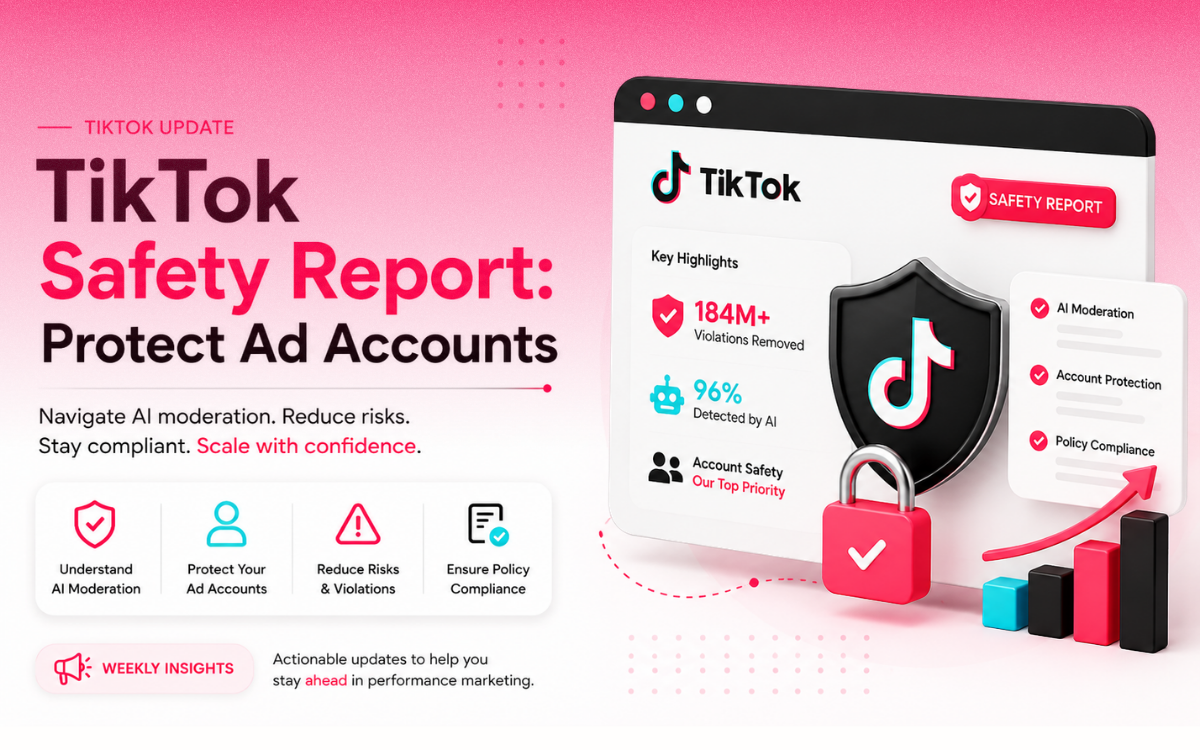
Analyzing the latest TikTok Safety Report reveals that 96% of content enforcement is now executed by AI algorithms, posing severe suspension risks for non-compliant ad accounts and TikTok Shop sellers. To prevent automated bans, performance marketers must master proactive moderation mechanics, strict IP whitelisting, and landing page synchronization. Below is H2T Media Group‘s technical analysis and operational compliance framework to help you protect your accounts and optimize ROI.
 Key Takeaways
TikTok Safety Report reveals that 96% of content enforcement is fully automated by AI algorithms, creating severe account suspension risks for non-compliant media buyers and TikTok Shop sellers.
Essential Facts About This Update
- 96% AI Enforcement: Over 184 million violating items were removed with a 99.3% proactive removal rate, rendering traditional re-up content strategies obsolete.
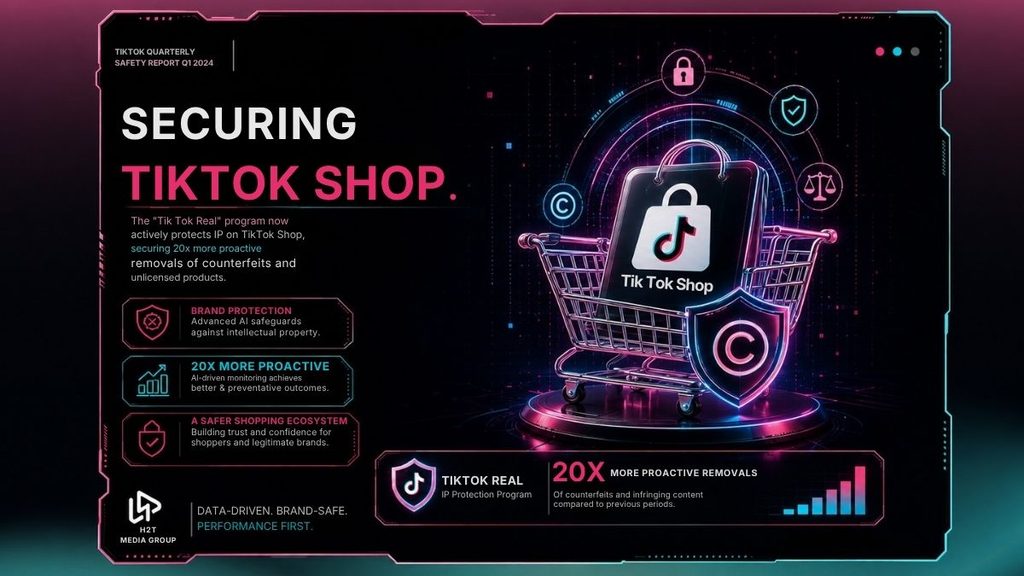
- “TikTok Real” IP Protection: Proactive counterfeit removals surged 20-fold, clearing the ad auction ecosystem and reducing CPA for legitimate D2C brands.
- Affiliate Whitelisting Mandatory: Spark Ads authorization codes and TTCM smart contracts are required to prevent automated AI bans on affiliate content.
- Landing Page Synchronization: AI crawlers cross-reference video claims with destination URLs; exact verbatim corroboration is required to avoid “Misleading Claims” rejections.
- Real-Time Reputation Alerts: Sentiment monitoring enables media buyers to pause ad spend during negative PR spikes, preserving the account’s Quality Score.
1. Technical Data: The Scale of Automated Moderation Systems
The TikTok Safety Report delivers explicit quantitative metrics regarding the management of the platform’s ad inventory. For digital advertisers, these metrics directly correlate to the risk parameters associated with content deployment.
1.1. Analyzing Takedown Metrics
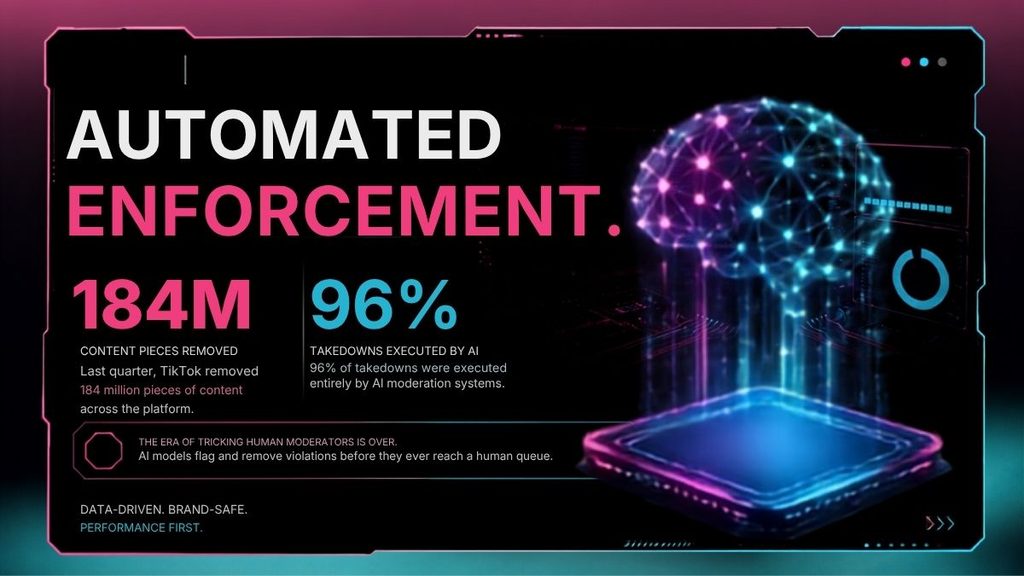
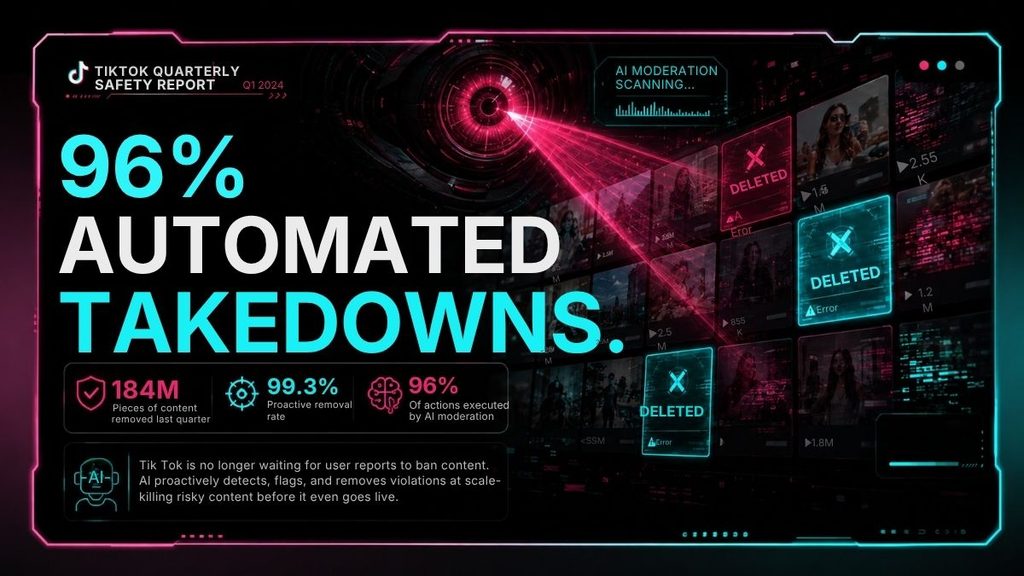
Over the previous quarter, TikTok removed a total of 184 million pieces of violating content. However, the most critical metric for performance marketers is not the absolute volume, but rather the Proactive Removal Rate, which stands at 99.3%.
This percentage indicates that the platform’s infrastructure detects and processes violations before the content is served to the end-user, or before any community reports are filed. The latency between a violating video upload and its subsequent deletion is now measured in milliseconds.
1.2. 96% of Enforcement Executed by Artificial Intelligence
The dataset confirms that 96% of all content and account disablement actions were executed entirely by Machine Learning models, requiring zero intervention from human moderators.
The Mechanics of TikTok’s Moderation AI:
- Computer Vision: The AI scans content on a frame-by-frame basis to identify inappropriate visual assets, unauthorized brand logos, or replicated design templates.
- Audio Hashing: The system generates a digital fingerprint for all audio streams. Attempting to bypass the system by altering the speed or pitch of copyrighted audio is no longer technologically viable.
- Natural Language Processing (NLP): The algorithm extracts text overlays, auto-captions, and analyzes the semantic structure of voiceovers to cross-reference against predefined lists of “Misleading Claims.”
Operational Impact: Media buying teams that rely on scraping and re-uploading content (Re-up strategies) will face a ban rate approaching 100%. The current algorithmic architecture possesses zero latency, eliminating the viability of loophole testing.
2. Restructuring TikTok Shop: Intellectual Property (IP) Enforcement Policy
Historically, one of the primary barriers preventing multinational Enterprise Brands from allocating substantial budgets to TikTok was the prevalence of Intellectual Property (IP) infringement and marketplace counterfeiters. This quarterly report confirms that TikTok is systematically eliminating this friction through the “TikTok Real” program.
2.1. A 20x Increase in Counterfeit Removals
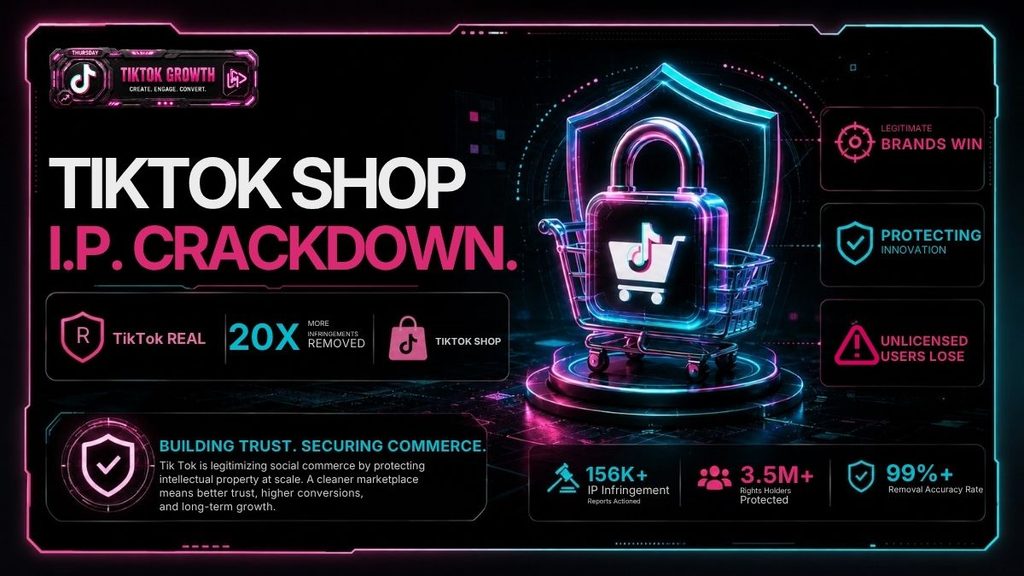
The “TikTok Real” protocol is now deeply integrated into the TikTok Shop backend infrastructure. The data records a 20-fold increase in the proactive removal of counterfeit goods, trademark infringements, and storefronts utilizing unlicensed visual assets.
Rather than waiting for brands to submit formal legal documentation (DMCA Takedowns), TikTok’s AI proactively cross-references uploaded product imagery against a globally authenticated trademark database. Retailers utilizing the dropshipping model with unlicensed assets are experiencing systematic revenue stream disablements.
2.2. Economic Advantages for Legitimate Brands
The systematic eradication of counterfeit sellers provides direct financial benefits for Direct-to-Consumer (D2C) brands.
- Reducing Auction Friction: Counterfeit accounts frequently engage in price dumping and utilize ad budgets to compete for impression share. Removing these entities cleans the auction ecosystem, directly contributing to a lower Cost Per Acquisition (CPA) for legitimate brands.
- Increasing Conversion Rates (CVR): As consumers are no longer exposed to low-quality knockoffs, purchase intent traffic is channeled directly into Official Stores, significantly improving the Return on Ad Spend (ROAS).
3. Managing Affiliate Marketing Distribution Risks
In an environment governed by high-frequency AI moderation, the Affiliate Marketing model encounters severe technical barriers if not configured precisely.
3.1. The Boundary Between Valid Affiliates and IP Theft
By default, TikTok’s AI algorithm cannot visually distinguish between a video uploaded by a contracted Affiliate partner and a video stolen by a scraping bot for unauthorized profit. If a Creator utilizes official brand assets to link a product without backend data authentication, the AI immediately categorizes the account as an IP violator and issues a suspension.
3.2. The Whitelisting Configuration Process
To protect the Affiliate network, enterprises must standardize their technical authorization protocols:
- TikTok Creator Marketplace (TTCM): All collaborations must be initiated through the TTCM platform. This establishes a “Smart Contract” within TikTok’s database, providing cryptographic proof that the creator possesses brand authorization.
- Spark Ads Authorization: Brands must generate and provide valid Spark Ads Authorization Codes to their partners. This code acts as a direct signal to the moderation algorithm that the promotional video has received explicit copyright owner approval.
4. Addressing False Positives Through Content Synchronization
When 96% of moderation decisions are delegated to AI, a certain percentage of False Positives is an unavoidable technical consequence. Fully compliant brands occasionally face ad rejections under the “Misleading Claims” category simply for utilizing standard marketing copywriting.
Cross-reference Analysis
TikTok’s Artificial Intelligence does not limit its analysis to the Ad Creative; it deploys Web Crawlers to scan the destination Landing Page. Penalties are frequently triggered by data asymmetry between these two sources.
Technical Solution:
- Ensure that all statistical figures, efficacy claims, or guarantee phrases (e.g., “Clinically proven,” “50% reduction in 7 days”) present in the video have exact, verbatim textual corroboration on the Landing Page.
- Clearly display the corporate entity’s contact information, return policies, and terms of service in the footer of the destination URL to maximize the Trust Score evaluated by the algorithm.
5. Integrating Real-Time Brand Reputation Monitoring Systems
Within TikTok’s Algorithmic Content Distribution environment, public relations crises can escalate exponentially within a matter of hours. The Safety Report introduces new toolsets assisting brands in controlling this information flow.
5.1. Compressing the Reaction Window
The Brand Reputation monitoring system allows enterprises to configure automated alerts based on keyword clusters and Sentiment Analysis. The objective of this system is not to prevent users from posting negative reviews, but rather to identify the velocity of those reviews at the earliest possible stage.
5.2. Protecting Advertising Budgets
At H2T Media Group, the integration of real-time alerts serves a vital financial management function. When the system identifies a negative brand narrative beginning viral distribution, Media Buyers must immediately Pause Ad Spend. Continuing to serve paid impressions during negative public sentiment merely wastes budget and accelerates malicious commentary, severely damaging the account’s overall Quality Score.
6. Standardized Compliance Framework for Media Buyers
To maintain account stability throughout the upcoming quarter, advertising operations teams must implement and strictly adhere to the following Technical Checklist prior to publishing any campaign:
| Inspection Parameter | Required Technical Standard | Consequence of Non-Compliance |
|---|---|---|
| Assets Origin | 100% of visual and audio assets hold valid commercial licenses. | Automated account suspension via AI Hashing verification. |
| Destination URL Synchronization | Alphanumeric content on the Landing Page strictly matches the Video script. | Ad Disapproval due to “Misleading Claims” policy violation. |
| Affiliate Authentication | Spark Ads code issued or TTCM linkage established. | Affiliate channel disabled from e-commerce features due to IP violation. |
| Product License Management | Business licenses and category certifications uploaded to TikTok Shop backend. | Products permanently frozen in the seller center. |
7. Frequently Asked Questions
The TikTok Safety Report highlights that 96% of content enforcement is executed automatically by AI algorithms with a 99.3% proactive removal rate. This means non-compliant ad creatives, stolen visual assets, or unverified claims trigger near-instant, automated account suspensions before human review can occur.
TikTok’s AI moderation tools cannot visually distinguish between an authorized affiliate creator and an IP scraping bot. Whitelisting via the TikTok Creator Marketplace (TTCM) and generating valid Spark Ads codes creates a verified data linkage in TikTok’s database, protecting affiliate channels from automated bans.
Landing page synchronization requires exact, verbatim alignment between the textual/voiceover claims in your ad video and the content on your destination URL. TikTok’s web crawlers cross-reference both sources; discrepancies trigger automated ad disapprovals under the “Misleading Claims” policy.
Agencies can minimize false positives by ensuring 100% of audio and visual assets hold valid commercial licenses, verifying landing page URLs for clear contact details and terms, and maintaining proactive IP authorizations for all promotional campaigns.
Serving paid ad impressions during a viral negative sentiment spike wastes budget and accelerates malicious user comments. Real-time sentiment alerts allow media buyers to immediately pause ad spend, preserving the account’s Quality Score and overall campaign ROI.
The latest TikTok Safety Report confirms that 96% AI enforcement is now the new standard, turning account compliance into an essential technical requirement rather than a creative choice. To safeguard your ad accounts and maximize ROI, performance teams must systematically standardize IP whitelisting, moderation mechanics, and landing page synchronization. For deeper algorithmic analysis, technical guides, and growth strategies, explore our TikTok category on the official Insights page at H2T Media Group.

bichthao
H2T Media Group decodes every meaningful platform update for advertisers and affiliate partners across APAC, EU and North America — always with a practical "H2T take" you can act on.
More about H2T →